Why a List Like This Matters
Most of what dogs do — vomiting once, limping for a day, eating grass — does not require an emergency visit. But a small set of presentations need a veterinarian now, not tomorrow. Recognizing these in the moment is the difference between a treatable problem and a fatal one. The list below is the consensus across veterinary emergency medicine[^aaha2024][^acvecc2024]. None of these signs are subtle once you know to look for them.
When in doubt, call your vet or a 24-hour emergency clinic before you drive over. Trained staff can tell you whether to come in, what to bring, and what to do on the way.
The 10 Signs
1. Difficulty Breathing
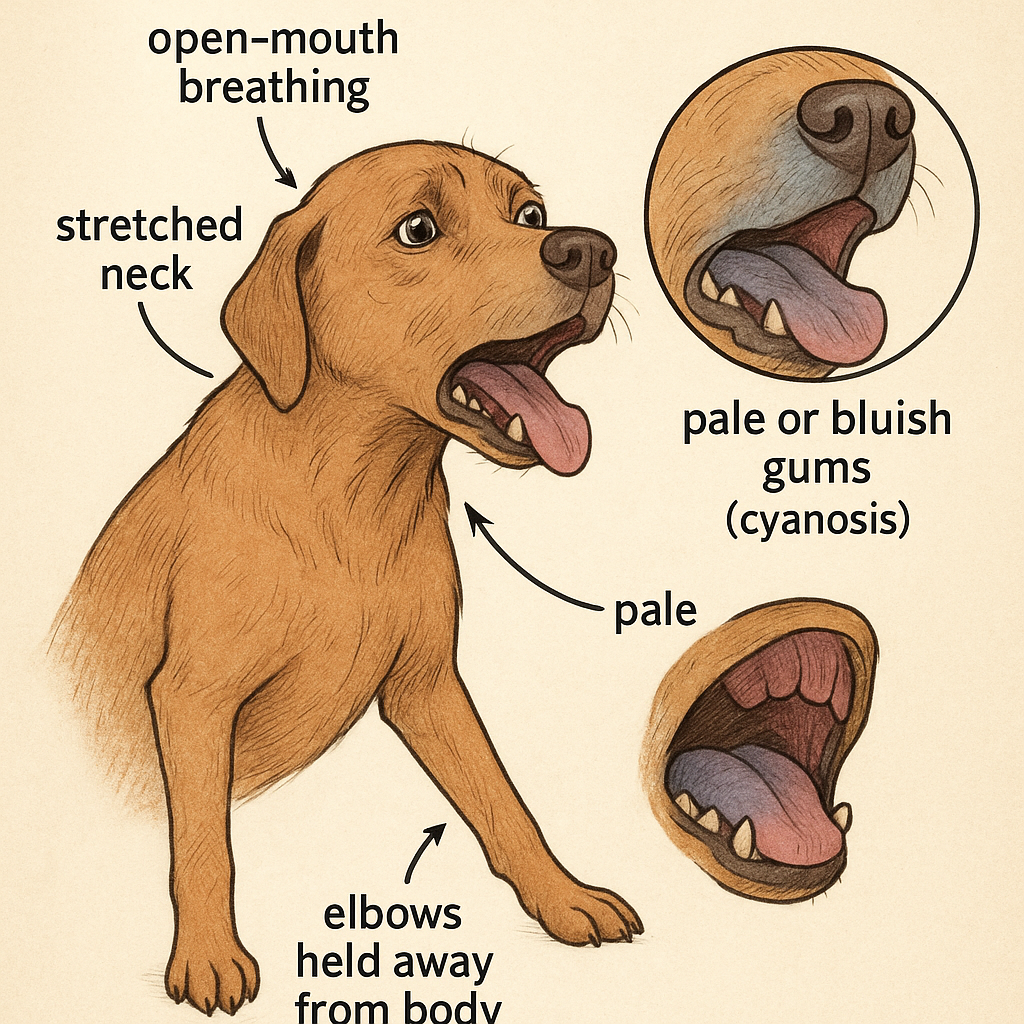
Labored breathing, open-mouth breathing at rest, abdominal effort to inhale, blue or gray gums (cyanosis), or a stretched-out neck and elbows held away from the body. Any of these means oxygen is not getting where it needs to go.
Do not delay. Drive in immediately. Keep the dog calm; carry small dogs, do not exert large ones.
2. Distended Abdomen with Unproductive Retching
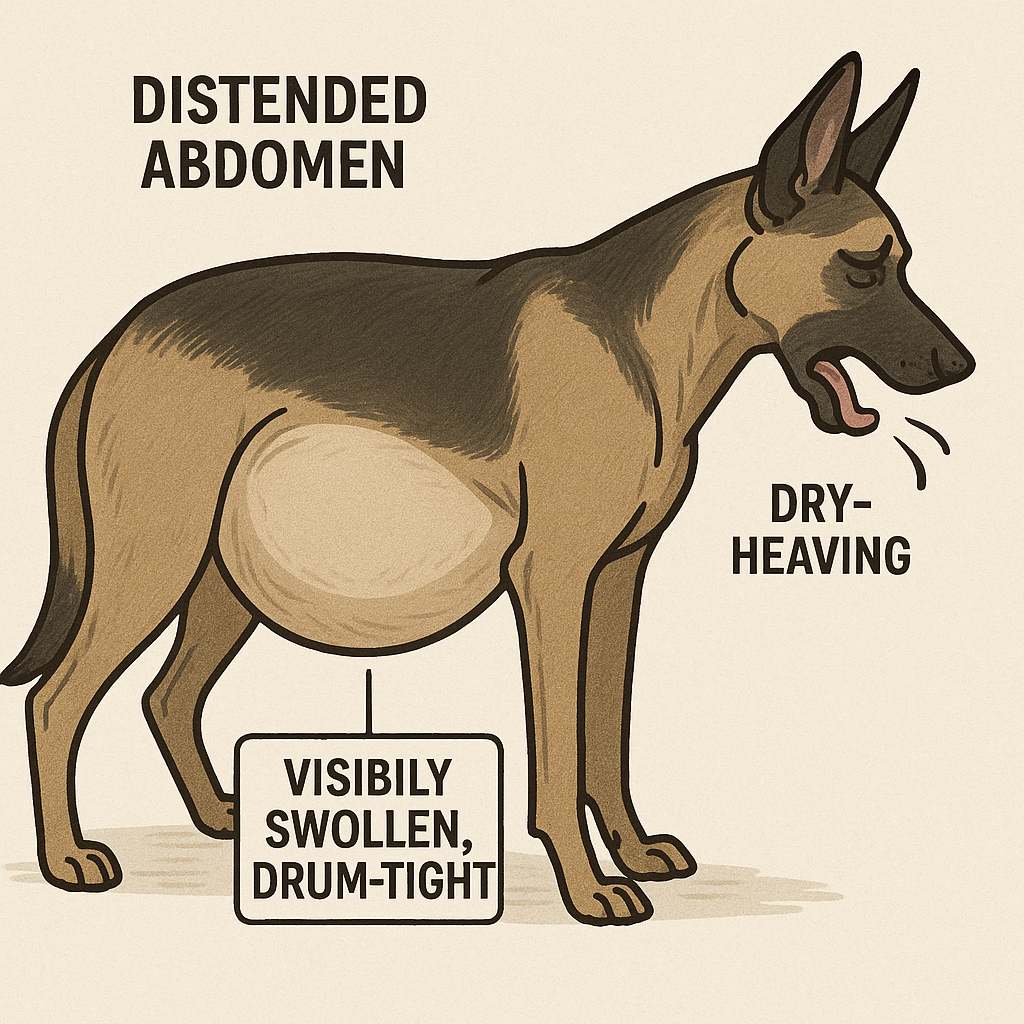
A swollen, drum-tight belly combined with repeated dry-heaving (no vomit comes up) and visible distress is the classic presentation of gastric dilatation-volvulus (GDV), often called "bloat." Without surgery within hours, GDV is fatal[^acvs2024]. Deep-chested breeds (Great Danes, Standard Poodles, German Shepherds, Weimaraners) are most at risk, but it occurs in any breed.
This is a surgical emergency. Go directly to a clinic that performs surgery.
3. Inability to Urinate (Especially Male Dogs)
Repeated trips to squat or lift with no urine produced, straining, crying when trying to urinate, or a tense, painful belly. In male dogs this is most often urethral obstruction (stones or crystals blocking flow), which causes the bladder to back up into the kidneys and is fatal within roughly 48–72 hours if untreated[^acvecc2024].
Go in the same day, ideally within hours.
4. Collapse, Sudden Weakness, or Loss of Consciousness
A dog that falls and cannot get up, becomes unresponsive, or shows pale gums with a weak pulse may be in shock, internal bleeding, cardiac event, or severe metabolic crisis.
Go in immediately. Note the time of collapse and any preceding events (exertion, eating, noise) for the vet.
5. Seizure
A first-ever seizure, a seizure lasting longer than 2–3 minutes, or multiple seizures within 24 hours (cluster seizures). Status epilepticus — a seizure that does not stop — is a medical emergency.
Time the seizure. Do not put your hand near the dog's mouth. Move hard objects away. Drive in once the seizure ends, or call ahead if it continues past 3 minutes.
6. Severe Trauma
Hit by car, fall from height, dog fight with deep wounds, crushing injury. Even a dog that "seems fine" after being hit by a car can have internal bleeding, pneumothorax (air in the chest), or organ rupture that becomes apparent over hours.
Always be evaluated after significant trauma, even if the dog is up and walking.
7. Suspected Toxin Ingestion
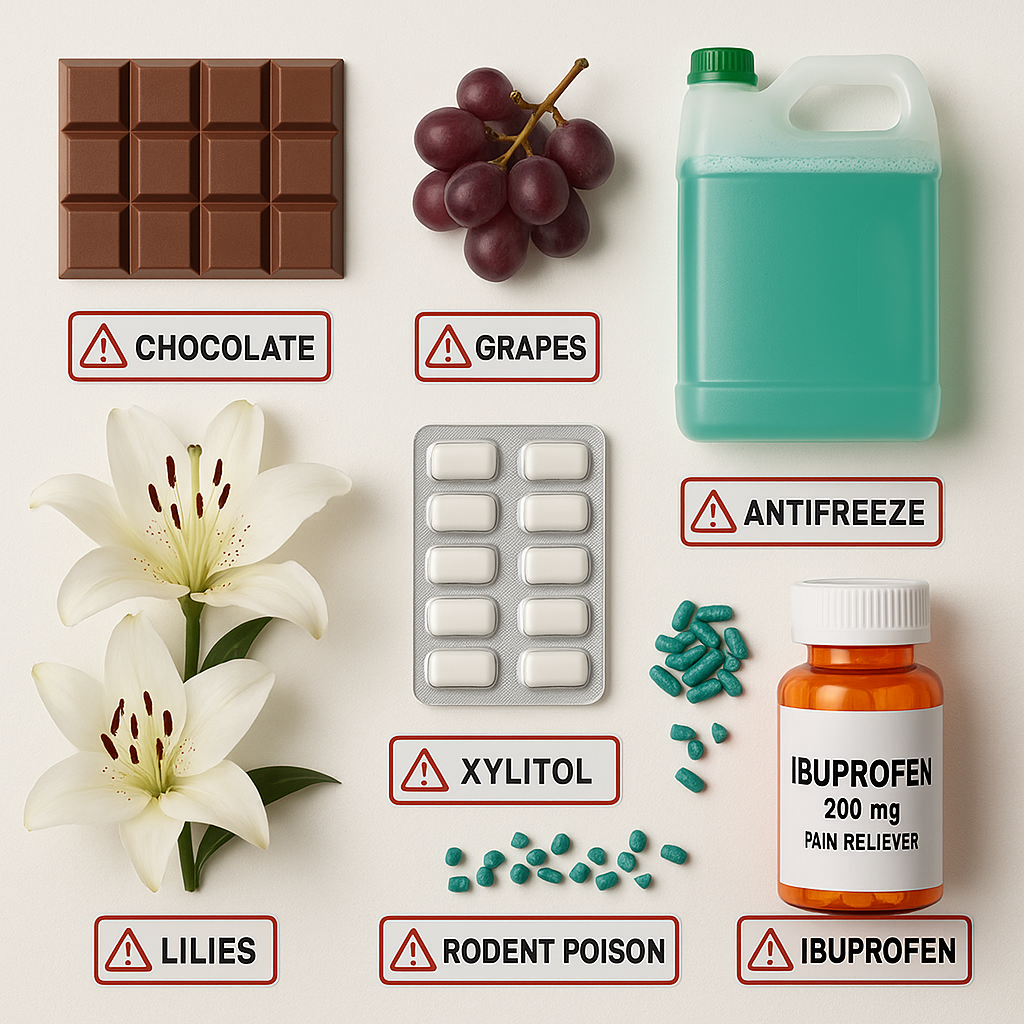
The most common dangerous ingestions in dogs include chocolate, xylitol (sugar substitute in gum, peanut butter, baked goods), grapes and raisins, lily species, antifreeze, anticoagulant rodenticides, NSAIDs (ibuprofen, naproxen), and recreational drugs[^aspca2024]. Symptoms can take hours to appear; do not wait for them.
Call ASPCA Animal Poison Control (888-426-4435) or Pet Poison Helpline (855-764-7661) while you drive in. Bring the packaging or a sample of what was eaten and an estimate of the dose.
8. Uncontrolled Bleeding
Bleeding that does not stop after 5 minutes of direct pressure, blood pooling on the ground, blood in vomit, blood in stool (especially black tarry stool, which is digested blood from the upper GI tract), bleeding from the nose, or visible bruising on the gums or belly skin.
Apply firm direct pressure with a clean cloth and drive in.
9. Severe or Sudden Pain
Yelping when touched, hunched posture, refusing to move, "praying position" (front down, hindquarters up — often a sign of abdominal pain), or vocalizing without apparent cause. Severe pain is itself a reason to go in; pain in dogs is consistently underrecognized and undertreated[^acvecc2024].
Do not give human pain medications. Many (ibuprofen, acetaminophen, naproxen) are toxic to dogs.
10. Persistent Vomiting or Diarrhea
More than 2–3 episodes in a few hours, inability to keep water down, blood in vomit or stool, vomiting plus lethargy, or any of these signs in a puppy under 4 months. Puppies and small dogs dehydrate quickly and can decompensate within a day. Persistent vomiting is also one of the early signs of toxin ingestion and intestinal obstruction.
Call your vet the same day. Bring a sample of the vomit or stool if you can.
Before You Drive: Three Things
- Call ahead. "I'm coming in with a [breed/size] dog who is [main sign]." This lets the team prepare the room, equipment, and staff before you arrive.
- Know where you're going. Save your closest 24-hour emergency clinic in your phone now, not in the moment. Daytime regular vets often refer out for after-hours emergencies.
- Bring evidence. Packaging of any suspected toxin, a sample of vomit or stool, and a list of any medications or supplements the dog is on.
What Not to Do
- Do not induce vomiting at home unless instructed by a vet or poison control. Some toxins (caustic substances, sharp objects, certain medications) cause more damage coming back up.
- Do not give human medications without veterinary direction. Acetaminophen, ibuprofen, naproxen, aspirin, and decongestants are commonly fatal to dogs at over-the-counter human doses.
- Do not "wait and see" with breathing difficulty, suspected bloat, urinary obstruction, collapse, or known toxin ingestion. Time is the variable that determines whether these are survivable.
Build the Habit Now, Not in the Moment
The single most useful action a dog owner can take today is to save three numbers in their phone: their primary vet, their nearest 24-hour emergency clinic, and ASPCA Animal Poison Control (888-426-4435). The list above is most useful when you do not have to look anything up at 2 AM.
Key Takeaways
- Ten presentations warrant immediate veterinary care: difficulty breathing, distended abdomen with retching, inability to urinate, collapse, seizure, severe trauma, suspected toxin ingestion, uncontrolled bleeding, severe pain, and persistent vomiting or diarrhea.
- "Seems fine after" trauma or toxin exposure is not reassurance — internal bleeding and many toxins have delayed onset.
- Call ahead so the clinic is ready when you arrive.
- Save your emergency numbers in your phone before you need them: primary vet, 24-hour ER, ASPCA Animal Poison Control (888-426-4435).
- Do not give human pain medications to dogs.
Sources & further reading
- American Animal Hospital Association. (2024). When is it an Emergency?. AAHA. https://www.aaha.org/your-pet/pet-owner-education/when-it-is-an-emergency/
- American College of Veterinary Emergency and Critical Care. (2024). Recognizing Emergencies in Pets. ACVECC. https://acvecc.org/
- American College of Veterinary Surgeons. (2024). Gastric Dilatation-Volvulus. ACVS. https://www.acvs.org/small-animal/gastric-dilatation-volvulus/
- ASPCA Animal Poison Control Center. (2024). Animals Poisons and Toxic Plants. ASPCA. https://www.aspca.org/pet-care/animal-poison-control