What Fear Periods Are
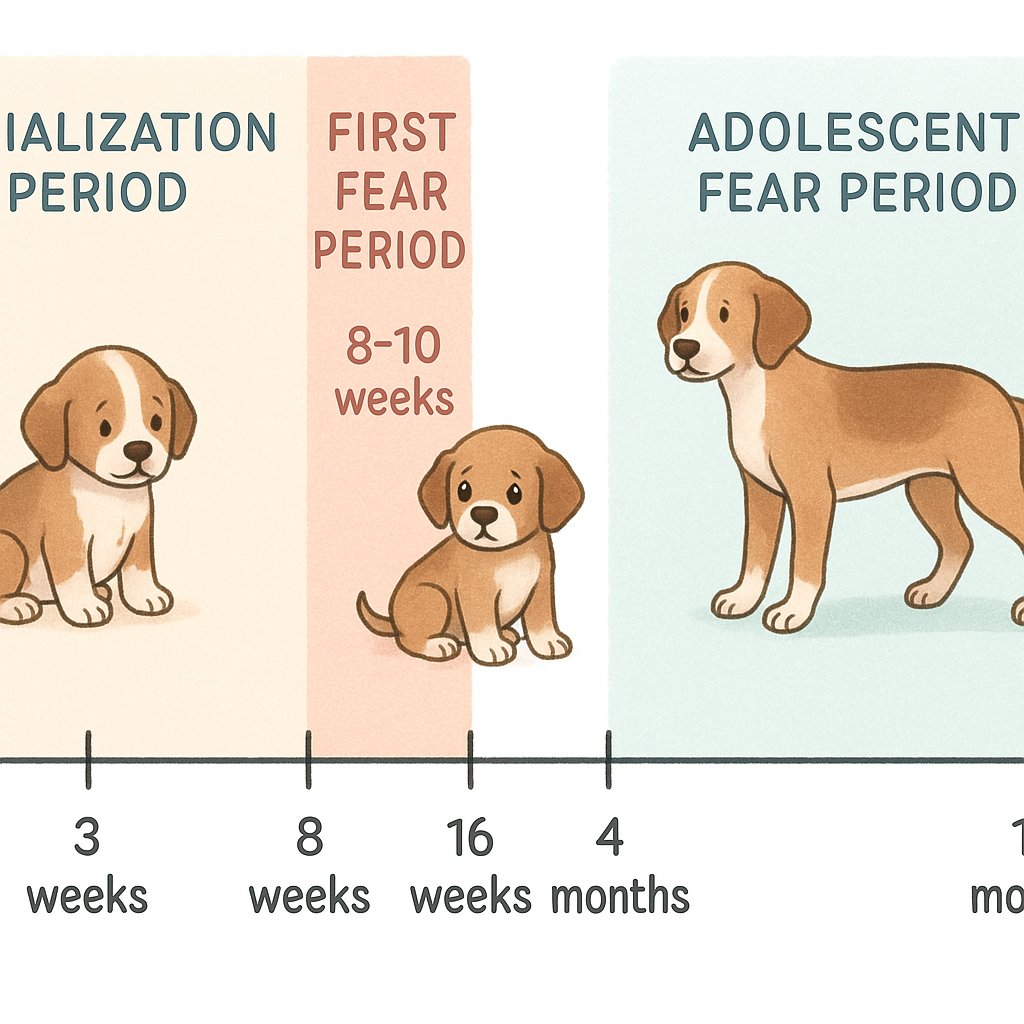
A fear period is a developmental window during which the puppy or adolescent dog is unusually sensitive to novel or aversive experiences. During these windows, the dog's nervous system is forming or rewiring associations between stimuli and emotional responses; events that occur during the window have larger and more lasting impact than equivalent events outside the window.
The framework comes from developmental biology — many species have sensitive periods during which the nervous system is more plastic in specific ways, and the early-life sensitive periods are particularly impactful. In dogs, two fear-related windows are commonly described:
The first fear period (roughly 8-10 weeks). This window overlaps with the puppy primary socialization period (3-16 weeks) covered in the socialization-windows article. During the first fear period specifically, the puppy's stress and fear responses become more acute; experiences that the puppy finds frightening can produce associations that persist for life.
The adolescent fear period (typically 4-12 months, variable by breed). During canine adolescence, the developing brain undergoes substantial restructuring, particularly in the prefrontal cortex and the limbic system. Some dogs show what looks like a "second fear period" during this time — sudden new fearfulness about previously-tolerated stimuli, hesitation about novel situations they would have approached confidently a few weeks earlier. The neurobiology is consistent with adolescent reorganisation: the same period when the dog's behaviour becomes generally more independent and challenging (covered in the adolescent-decline article) is also a time of heightened emotional sensitivity.
The Underlying Biology
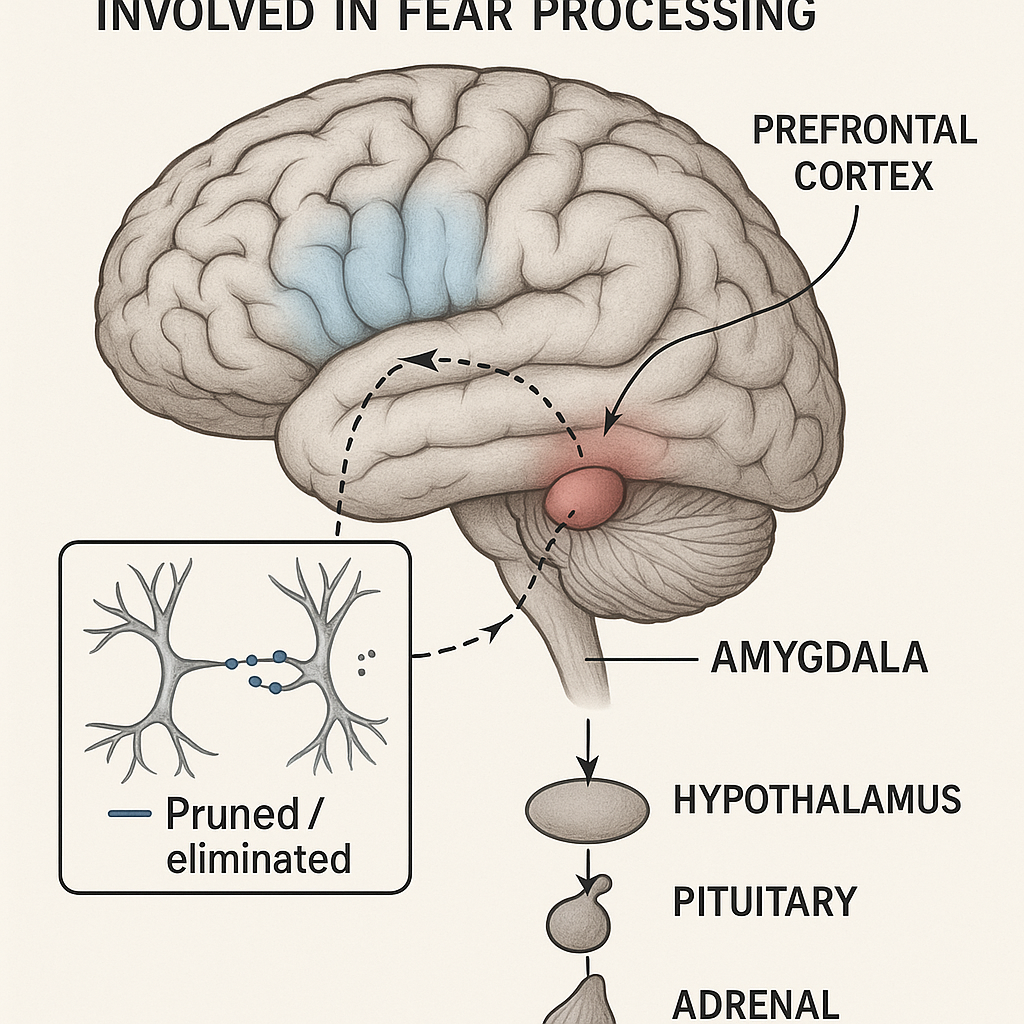
Fear periods reflect normal developmental neurobiology:
Synaptic pruning and rewiring. The developing brain is overproducing connections that are then pruned based on experience. Connections that are used are retained; connections that are not used are eliminated. The pattern of experiences during sensitive periods markedly shapes the resulting wiring.
Stress-response system maturation. The hypothalamic-pituitary-adrenal (HPA) axis — the system that produces stress responses — matures during these developmental windows. Repeated activation of the stress response during sensitive periods can produce a more reactive HPA system in adulthood.
Memory consolidation differences. Fear memories specifically appear to consolidate strongly in some developmental windows; the same aversive experience may produce a stronger and more persistent memory in a sensitive window than at other times.
Amygdala-prefrontal cortex coupling. The amygdala (which generates fear responses) and the prefrontal cortex (which modulates and regulates fear) develop on partially separate timelines. During adolescence, the amygdala may be relatively over-active relative to the still-maturing prefrontal cortex, producing heightened emotional reactivity.
The practitioner-consensus framework of "fear periods" maps onto these developmental processes in ways that are broadly consistent with the broader developmental-biology literature in mammals.
What This Means in Practice
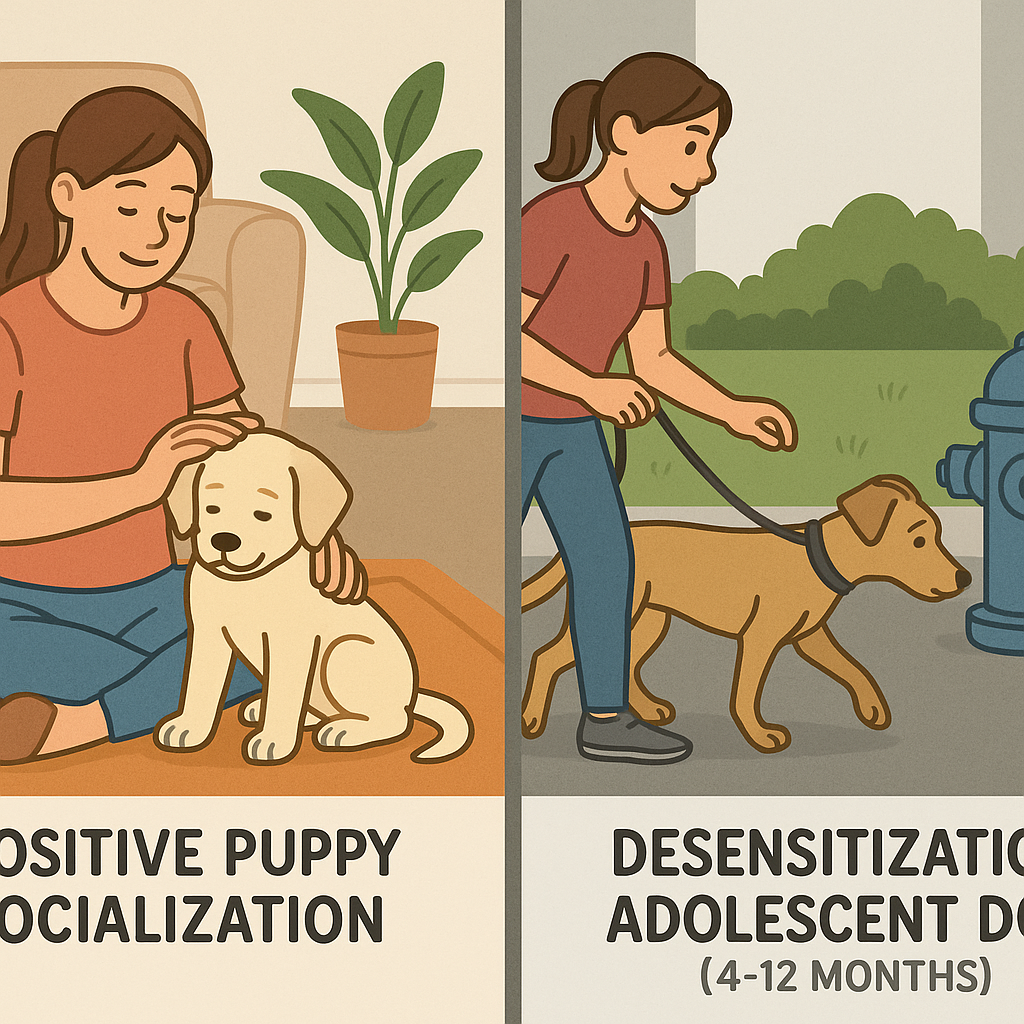
A few practical implications:
During the first fear period (around 8-10 weeks):
- Continue positive socialization carefully. The window is part of the broader socialization period; don't stop exposing the puppy to the world. But the exposures should be calibrated to be positive — clean environments, predictable people, controlled experiences.
- Avoid known trauma sources. Major aversive experiences (a frightening encounter with an aggressive dog, harsh handling, a major medical event with poor handling) during this window can produce lasting fear of the relevant stimuli.
- Set up positive associations with veterinary handling, grooming, and crate work. These are routine adult experiences; positive associations during this window protect against later trauma.
- Monitor the puppy's responses. Some experiences that seem benign to the owner are perceived as threatening by the puppy. Reading body language and adjusting matters.
During the adolescent fear period (typically 4-12 months):
- Don't push exposures the dog finds frightening. A dog who suddenly seems afraid of something they were fine with a month earlier is showing developmental sensitivity, not regression. Forcing the exposure can produce lasting fear.
- Maintain routine training and structure. The dog's increased emotional sensitivity is a temporary state; consistent routines support stability through the period.
- Use desensitisation rather than flooding. If the dog is showing fear about specific things, gradual exposure with positive reinforcement works better than expecting the dog to "get over it".
- Recognise the period and wait for it to pass. Many adolescent fears resolve as the brain finishes developing. Forcing through them can produce lasting issues; patience and management often work better.
Across both periods:
- Avoid harsh training methods. Aversive training approaches are particularly counterproductive during sensitive windows; the welfare and behavioural costs are amplified.
- Document what the dog finds frightening. Specific patterns of fear that emerge during these windows benefit from later behaviour-modification work.
- Work with the dog's individual sensitivities. Some dogs are bolder, some more cautious; the framework is general but the application is individual.
Common Misconceptions
A few points where the popular framing can go wrong:
"My adolescent dog is being stubborn." The dog who is suddenly afraid of garbage cans, suspicious of strangers, or hesitant about activities they enjoyed as a young puppy is not being stubborn — they are going through developmental sensitivity. Treating it as defiance produces wrong responses.
"I have to keep socializing during the fear period because the window is closing." The window is not closing in the sense that all exposure must continue at full intensity. Quality of experience matters; pushing through frightening situations is counterproductive even though socialization more broadly is valuable.
"The puppy got scared once and is ruined forever." Fear-period experiences are influential but not deterministic. Recovery is possible with appropriate desensitisation and counter-conditioning work; the desensitization-counter-conditioning article covers the framework.
"My breeder said adolescent fear periods are a myth." The first fear period (around 8-10 weeks) is well-supported. The adolescent fear period has weaker direct empirical support but is consistent with adolescent neurobiology and is widely recognised by practitioners. The framework is useful even if the precise timing is variable.
Recovery From Fear-Period Trauma
When traumatic experiences occur during fear periods, lasting fear can develop. Recovery is possible through:
- Desensitisation and counter-conditioning — gradually exposing the dog to the trigger at low intensity paired with positive reinforcement.
- Avoiding re-exposure to traumatic intensity while the work is ongoing.
- Veterinary behaviourist consultation for severe or persistent cases.
- Patience and time — recovery often takes months to years rather than days to weeks.
What Is and Is Not Settled
Settled: a developmental sensitive period overlapping with the puppy socialization window includes a fear-related component (Scott & Fuller foundation; AVSAB position; broader developmental-biology framework)[^avsab]; experiences during this window have outsized formative impact in either direction; adolescent neurobiological development includes prefrontal-and-amygdala restructuring consistent with heightened emotional sensitivity.
Not settled: the precise timing and duration of the adolescent "fear period" across breeds and individuals; the comparative effectiveness of specific protective protocols across patient populations.
Key Takeaways
- Two fear-related windows in canine development: the first fear period (~8-10 weeks) overlapping with primary socialization, and the adolescent fear period (~4-12 months, variable by breed).
- Underlying biology: synaptic pruning, HPA-axis maturation, fear-memory consolidation, amygdala-prefrontal coupling.
- During fear periods: continue positive structured exposure, avoid known trauma sources, don't push frightening situations, recognise that adolescent fearfulness is developmental.
- Recovery from fear-period trauma is possible through desensitisation and counter-conditioning, often over months.
- Common misconceptions: treating adolescent fear as defiance, pushing through frightening situations because "the window is closing", assuming any frightening experience is permanent.
Sources & further reading
- American Veterinary Society of Animal Behavior. (2008). AVSAB Position Statement on Puppy Socialization. AVSAB. https://avsab.org/resources/position-statements/
- Journal of Veterinary Behavior. Journal of Veterinary Behavior. Elsevier. https://www.sciencedirect.com/journal/journal-of-veterinary-behavior
- Horowitz, A.. (2009). Inside of a Dog: What Dogs See, Smell, and Know. Scribner. https://www.alexandrahorowitz.net/
- Scott, J. P.; Fuller, J. L.. (1965). Genetics and the Social Behavior of the Dog. University of Chicago Press. https://press.uchicago.edu/