Why an Update Article
The original grain-free-DCM article covers the foundation: the FDA opened an investigation in 2018, veterinary cardiologists were seeing atypical DCM cases in breeds without genetic predisposition, and the cases clustered around grain-free, legume-heavy diets. By 2022 the FDA had issued a status report that the investigation was ongoing and that the picture was more complex than a simple "grain-free causes DCM" story.
This article is the update — what has been published since 2022, what is now more clear, and what is still open. It is not a re-explainer. Read the foundation article first if the topic is new.
What the Cardiology Literature Shows
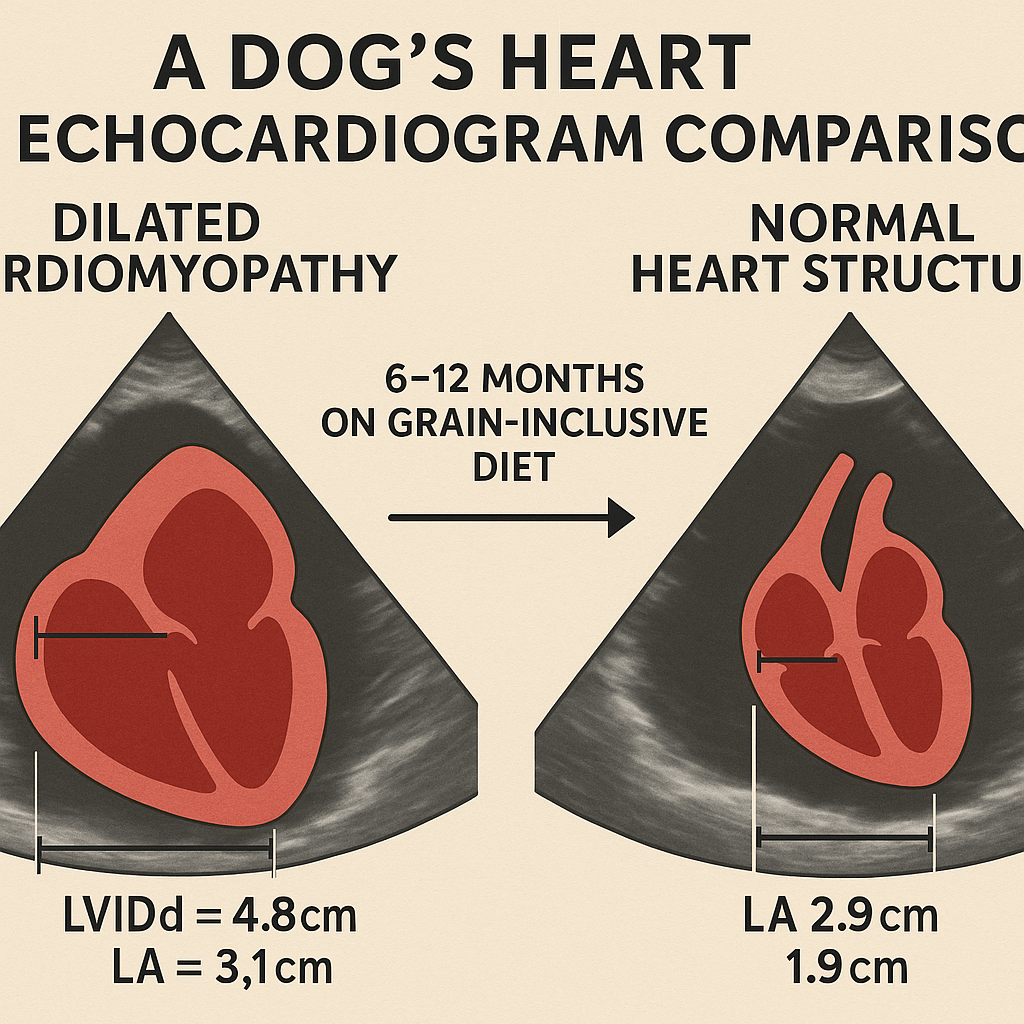
The strongest line of evidence for a real diet effect comes from the diet-change reversibility studies. If diet-associated DCM is a real phenomenon and not just coincidence, then dogs whose DCM was diet-associated should improve when their diet is changed. They do — at least in a substantial proportion of cases.
Freeman, Stern, Adin and others have published cardiology case series in which dogs diagnosed with DCM while on grain-free / pulse-rich diets show measurable cardiac improvement on echocardiography after diet change to traditional grain-inclusive diets, sometimes with normalisation of cardiac measures within 6-12 months[^freeman]. The improvements are not universal — some dogs have permanent cardiac changes, some improve only partially — but the reversibility pattern, in a population that would not be expected to recover from primary genetic DCM, is a strong signal that the diet effect is real.
This is not the same as proving that all DCM in atypical breeds is diet-related, or that any specific ingredient is the sole cause. It is evidence that something about these diet patterns is contributing to cardiac dysfunction in some dogs, and that removing the diet-pattern improves the cardiac picture.
What Is Increasingly Clear
A few things have become clearer in the post-2022 literature:
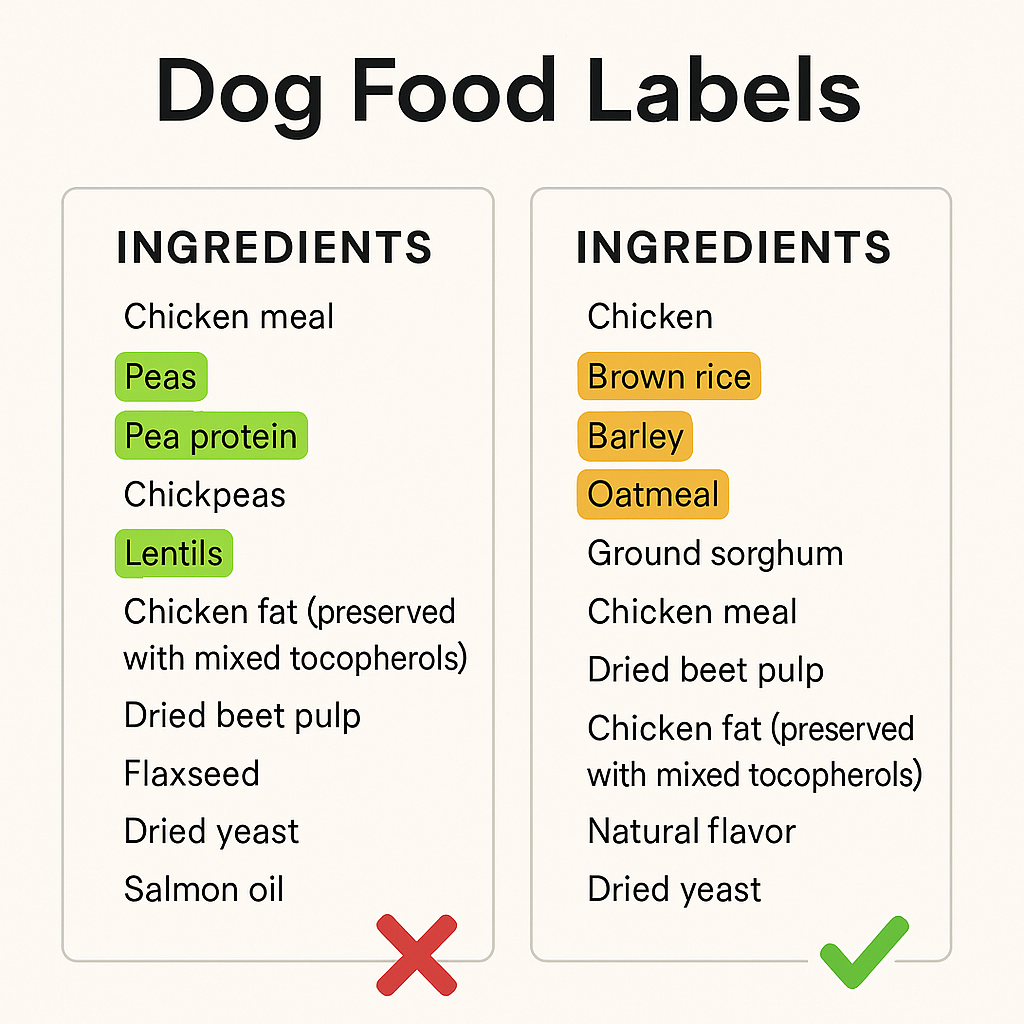
The "grain-free" framing is misleading. The investigation initially used "grain-free" as the descriptor because that was the most visible label commonality. The more refined picture: it is the inclusion of pulses (peas, lentils, chickpeas) and other legume sources high in the ingredient list, often as substitutes for grain, that correlates with the affected diets. A "grain-free" diet using primarily potato or sweet potato as the carbohydrate source is in a different position than a "grain-free" diet using peas and lentils. The "BEG" framing — Boutique, Exotic protein, Grain-free — captures the broader diet category more accurately than "grain-free" alone.
Pulse inclusion is the strongest correlate. The diets associated with cases tend to have pulses high in the ingredient list, often multiple pulse ingredients (peas, pea protein, pea fiber, lentils, etc.) whose combined contribution exceeds what the individual labels suggest.
Reversibility is real. Diet change can produce measurable cardiac recovery in many cases.
Taurine is not the whole story. Initial hypotheses focused on taurine deficiency, particularly because some dietary patterns produce low-taurine status. Subsequent work has shown that diet-associated DCM cases can occur with normal taurine levels, suggesting that other mechanisms are involved alongside or instead of taurine deficiency in some cases.
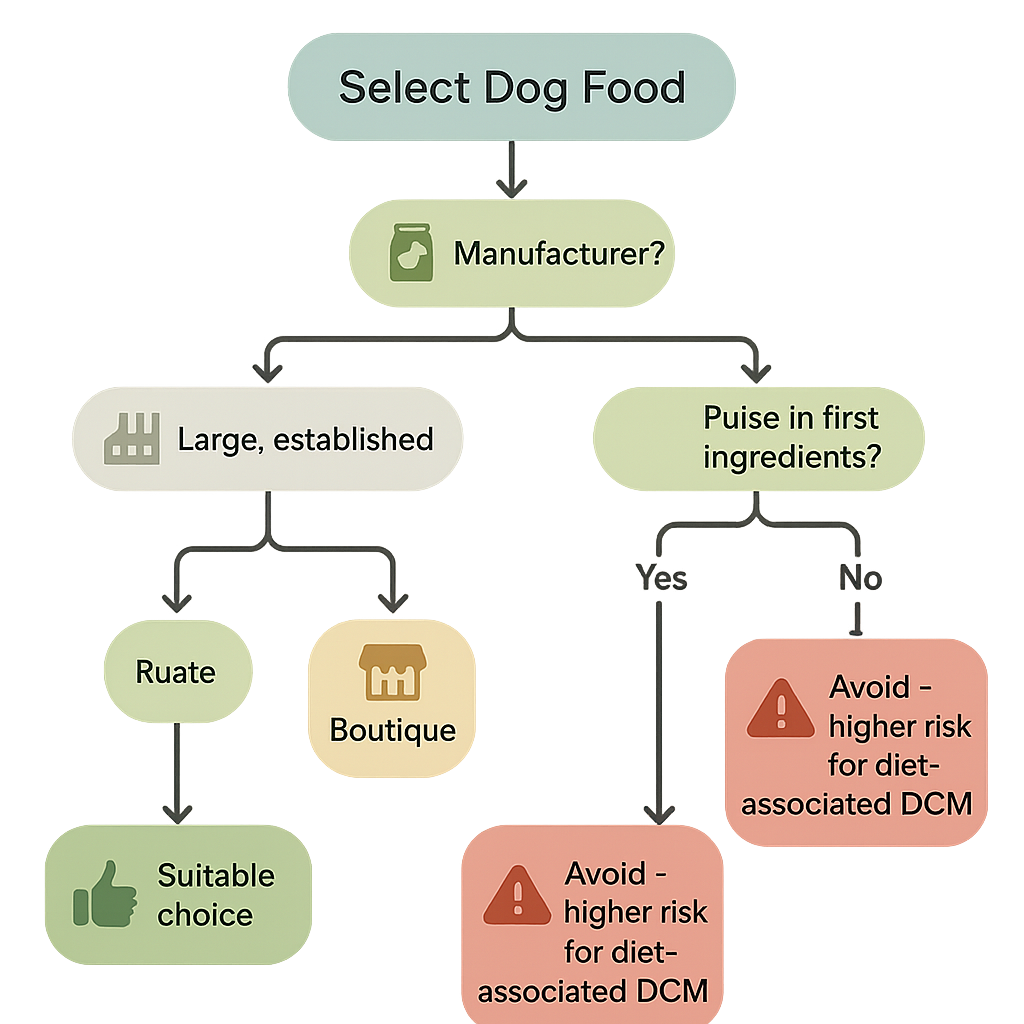
Manufacturer matters. Diets from manufacturers with strong nutritional-research programmes, board-certified veterinary nutritionists on staff, and rigorous formulation testing are at lower risk than diets from manufacturers without comparable infrastructure, even when the ingredient lists look similar.
What Is Still Open
A few questions remain unsettled:
The specific causative mechanism. Why pulse-heavy diets are associated with DCM in some dogs is not definitively known. Hypotheses include taurine deficiency in a subset of cases, sulphur-amino-acid interactions, anti-nutrient effects (lectins, phytates, saponins) on absorption or metabolism, fibre fermentation effects, and others. The mechanism may be multifactorial.
The susceptible population. Not every dog on a pulse-rich diet develops DCM. Why some dogs are susceptible and others are not is not fully understood. Genetic factors, individual gut microbiome differences, age, and other variables may all contribute.
The exact thresholds. How much pulse inclusion is concerning, in what context, with what other ingredients, is not precisely defined. The cardiology consensus is more "avoid pulse-heavy diets, particularly from manufacturers without strong nutritional programmes" than "any pulse exposure is dangerous".
The breed-specific picture. Some breeds (Golden Retrievers, in particular) appear over-represented in the diet-associated DCM cases beyond what their general population prevalence would predict. Whether this reflects a breed-specific susceptibility, owner-feeding preferences in those breeds, or other factors is not fully established.
What the Cardiology Consensus Recommends in 2024-2026
Synthesising the practitioner picture:
- Avoid BEG diets (boutique, exotic-protein, grain-free) in favour of diets from manufacturers with strong nutritional-formulation programmes — typically the larger established manufacturers with board-certified veterinary nutritionists on staff.
- Be cautious about pulses high in the ingredient list. A diet listing peas or lentils in the first few ingredients warrants particular scrutiny.
- Use grain-inclusive diets unless there is a specific medical reason. The "grain-free" market positioning was largely marketing-driven; there is no evidence that grain inclusion is harmful for healthy dogs and the diet-associated DCM evidence weighs against grain-free formulations.
- Monitor for early cardiac signs in dogs on suspect diets: exercise intolerance, cough, increased respiratory effort, syncope. These are not specific to diet-associated DCM but warrant veterinary cardiology evaluation.
- Consider cardiac screening for dogs on suspect diets, particularly in higher-risk breeds.
- If DCM is diagnosed, diet change is part of the treatment protocol (alongside cardiology medications) and may produce measurable improvement.
What This Does Not Imply
- Grain-free diets do not universally cause DCM. The association is statistical; many dogs eat them without developing DCM.
- All non-traditional diets are dangerous. Therapeutic diets formulated for specific medical conditions (food allergies, GI disease) by manufacturers with strong programmes are different from BEG marketing diets.
- Grain inclusion does not "fix" all dogs. Most dogs do not have DCM in the first place; the relevant decision is diet selection going forward, not panicked switching.
- The investigation is not closed. The picture continues to develop; specific recommendations may shift as more evidence accumulates.
What Is and Is Not Settled
Settled (as of 2026): diet-associated DCM is a real phenomenon, with reversibility on diet change documented in cardiology case series (Freeman, Stern, Adin and others)[^freeman]; the BEG diet pattern (particularly pulse-rich formulations) is the strongest dietary correlate; manufacturer formulation quality matters; taurine deficiency is part but not all of the mechanism.
Not settled: the specific causative mechanism (single agent vs. multifactorial); the precise susceptible-population predictors; the exact pulse-inclusion thresholds of concern; whether breed-specific susceptibility is genetic or feeding-pattern-related.
Key Takeaways
- The grain-free / DCM investigation has continued to develop; cardiology case series document reversibility on diet change.
- The relevant pattern is BEG diets (Boutique, Exotic protein, Grain-free) with pulses (peas, lentils, chickpeas) high in the ingredient list — not "grain-free" per se.
- Taurine deficiency is part of the picture but not the whole mechanism.
- Manufacturer matters: established manufacturers with strong nutritional programmes are at lower risk than smaller boutique producers.
- 2024-2026 consensus: prefer grain-inclusive diets from manufacturers with strong formulation programmes; avoid pulse-heavy BEG diets unless medically indicated.
- The investigation is ongoing, not closed; specific recommendations may continue to evolve.
Sources & further reading
- Freeman, L. M.; Stern, J. A.; Fries, R.; Adin, D. B.; Rush, J. E.. (2018). Diet-associated dilated cardiomyopathy in dogs: what do we know?. Journal of the American Veterinary Medical Association, 253(11), 1390-1394. https://doi.org/10.2460/javma.253.11.1390
- U.S. Food and Drug Administration. (2022). FDA Investigation Into Potential Link Between Certain Diets and Canine Dilated Cardiomyopathy. U.S. Food and Drug Administration. https://www.fda.gov/animal-veterinary/outbreaks-and-advisories/fda-investigation-potential-link-between-certain-diets-and-canine-dilated-cardiomyopathy
- Association of American Feed Control Officials. AAFCO Pet Food Standards including grain-free / non-traditional diet considerations. AAFCO. https://www.aafco.org/consumers/understanding-pet-food/
- World Small Animal Veterinary Association. (2021). WSAVA Global Nutrition Guidelines. World Small Animal Veterinary Association. https://wsava.org/global-guidelines/global-nutrition-guidelines/
- American Veterinary Medical Association. AVMA Diet-Associated DCM Resources. American Veterinary Medical Association. https://www.avma.org/