Probiotic vs. Prebiotic — The Distinction Matters
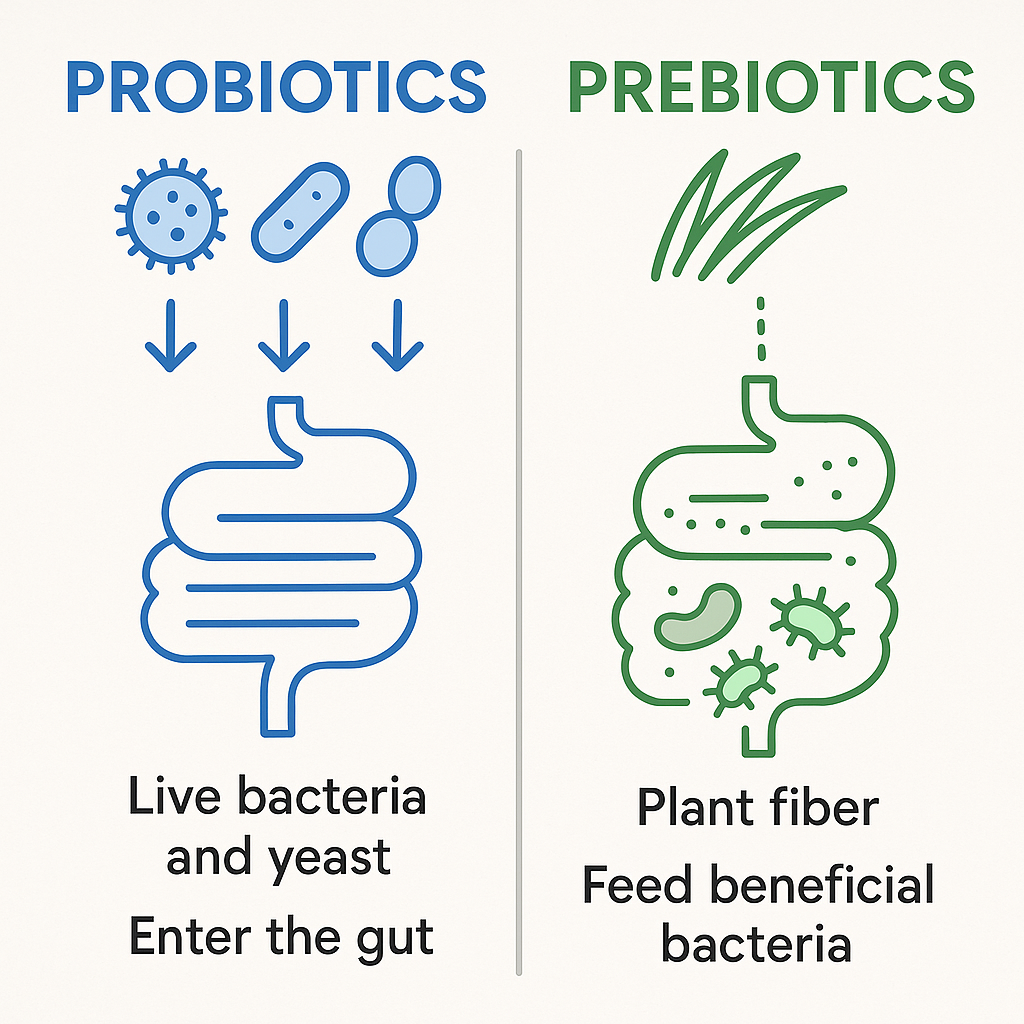
The two words are often used interchangeably; they refer to different things:
Probiotics are live microorganisms that, when administered in adequate amounts, confer a health benefit on the host. The product introduces specific organisms (specific strains of bacteria or yeast) into the gut.
Prebiotics are non-digestible food components that selectively stimulate the growth or activity of beneficial gut bacteria already present. The product does not introduce organisms; it feeds the ones the dog already has.
Both can support gut health, but through different mechanisms. The evidence base for each is also different — strain-specific for probiotics, fermentation-profile-specific for prebiotics.
Probiotic Evidence in Dogs Is Strain-and-Condition Specific
The most important framing point: "probiotics" is not a product category in which different products are interchangeable. Each strain has its own evidence base for its own conditions. Saying "probiotics work for diarrhea in dogs" is roughly as informative as saying "antibiotics work for infections in dogs" — true in some sense, but the specific drug for the specific condition is what actually matters.
The strongest empirical support exists for specific strain-condition pairings:
Enterococcus faecium SF68 (commercially as FortiFlora). One of the better-studied veterinary probiotics. Multiple peer-reviewed trials report shorter duration of acute diarrhea, particularly stress-related diarrhea (shelter contexts, travel-related, environmental stressors), with this strain[^fortifora]. The product is widely used in veterinary practice for short-term acute GI applications.
Saccharomyces boulardii. A yeast (not a bacterium), used widely in human medicine for antibiotic-associated diarrhea and shows effects in dogs in similar contexts. Some veterinary formulations are available.
Specific Bifidobacterium and Lactobacillus strains. Various strains have been studied for specific applications including chronic diarrhea, atopic dermatitis (some preliminary evidence on the gut-skin axis), and post-antibiotic recovery. The evidence varies by strain and application.
Multi-strain formulations. Some veterinary products combine multiple strains. Whether the multi-strain format provides additional benefit beyond single-strain formulations for specific applications is not always well-established; the evidence is product-by-product.
Prebiotic Evidence
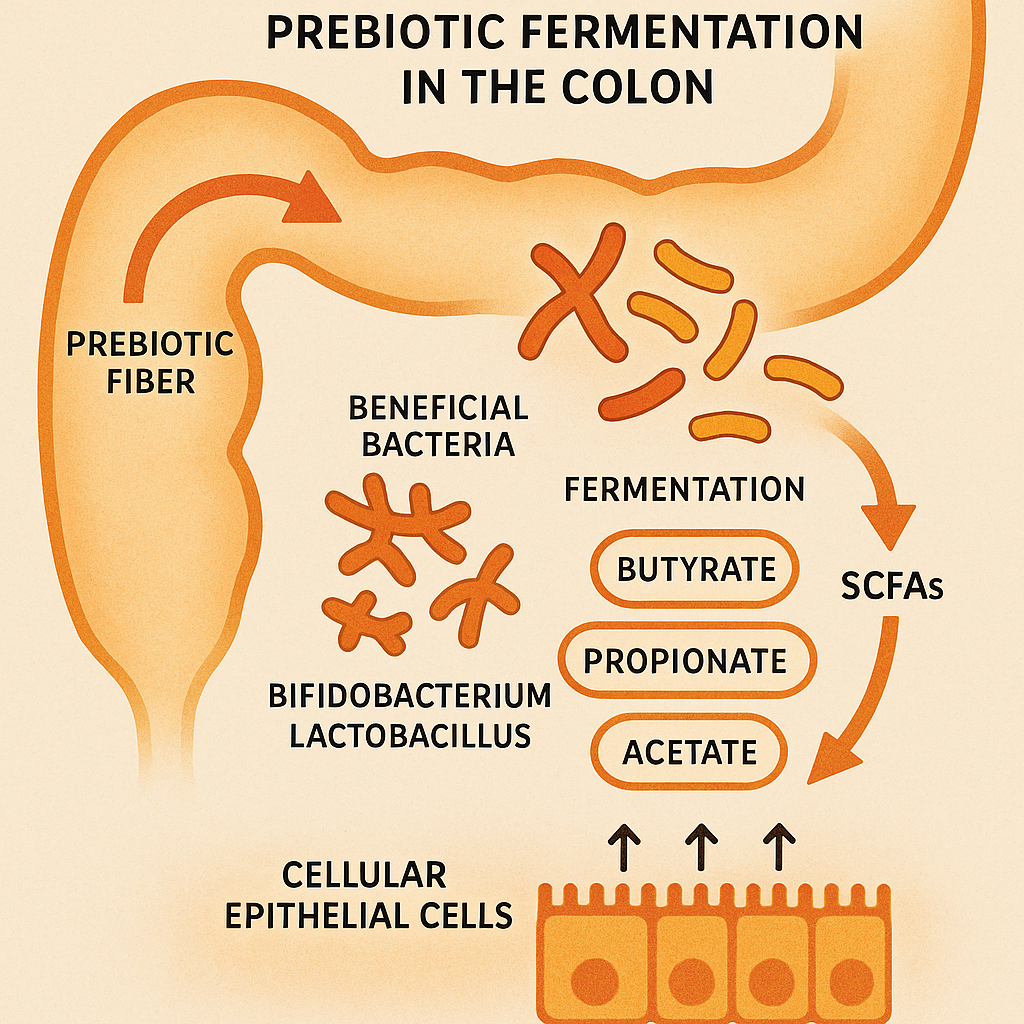
Prebiotic fibers support beneficial bacterial populations through fermentation in the colon. The bacterial fermentation produces short-chain fatty acids (SCFAs) — acetate, propionate, butyrate — that nourish colonic epithelial cells and contribute to systemic metabolic health. The most-studied prebiotics in dogs:
- Fructooligosaccharides (FOS). Selective substrate for Bifidobacterium and Lactobacillus populations. Common addition to therapeutic and many commercial diets.
- Mannan-oligosaccharides (MOS). Bind pathogens and support gut-barrier function in addition to feeding beneficial bacteria. Common in veterinary formulations.
- Inulin. Highly fermentable; selective for beneficial bacterial populations.
- Beet pulp (a moderately fermentable mixed fiber discussed in the dietary-fiber article) provides modest prebiotic support along with other fiber functions.
Prebiotics work through the dog's existing microbiome rather than introducing new organisms. The advantage: the introduced fiber survives the upper GI without question — it does not need to be a viable organism. The limitation: prebiotic effect depends on the dog already having appropriate beneficial bacterial populations to feed.
Product Quality Variation
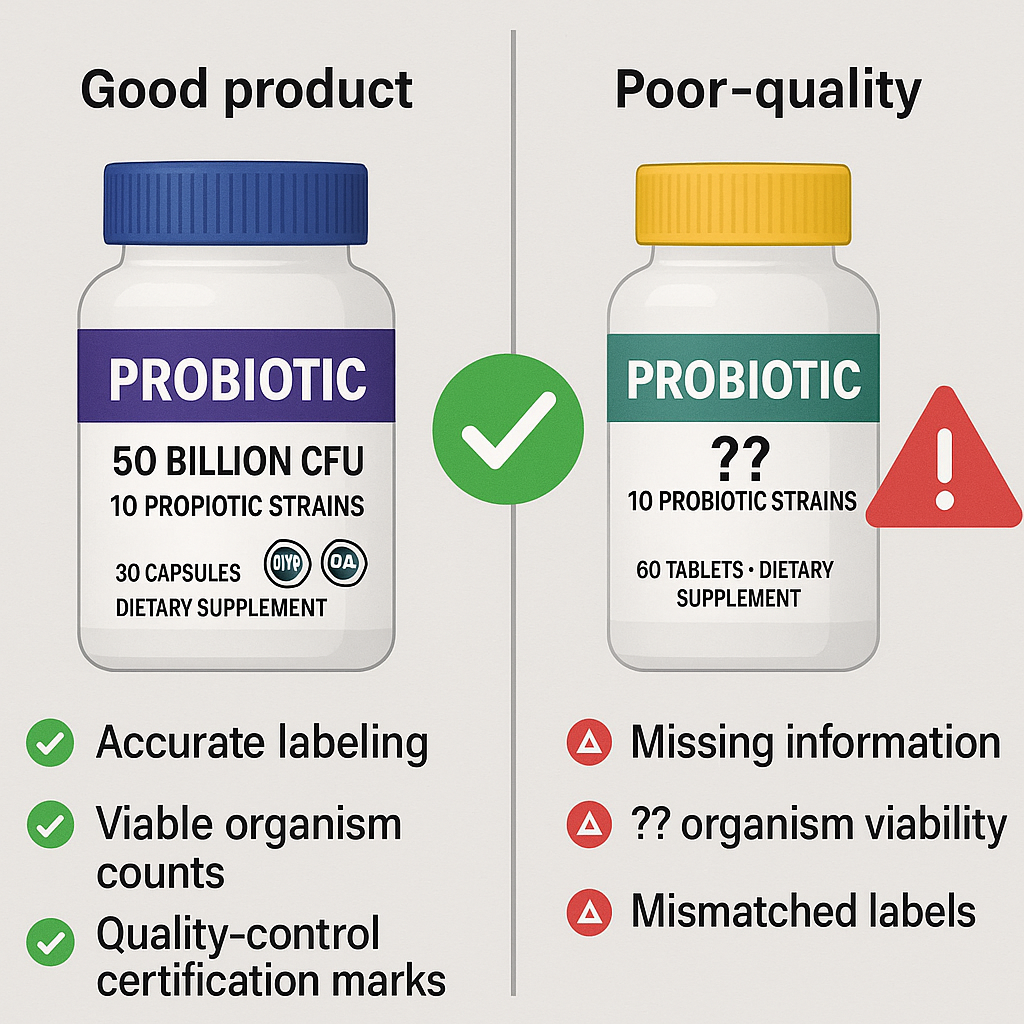
A practical concern with probiotics specifically: published surveys of over-the-counter pet probiotic products have repeatedly found that many products do not contain the labeled organisms in viable form, in the labeled quantities, or sometimes at all. The variability is substantial — some products are accurately labeled; others have appreciably fewer viable organisms than claimed; some have organisms not on the label or different organisms than stated.
This means brand and manufacturer matter for probiotics in a way that is not as strong for many other supplements. Veterinary-distributed products from established manufacturers with quality-control programmes are at lower risk of label-fact mismatch than online over-the-counter products. Products with peer-reviewed efficacy studies in dogs (FortiFlora is the most widely-studied example) have the additional advantage of documented effects.
Practical Applications
Short-term acute diarrhea. FortiFlora (Enterococcus faecium SF68) has the strongest evidence and is a reasonable first-line adjunct. Typical use: 1 sachet daily for 5-7 days alongside standard supportive care. Severe or persistent diarrhea needs veterinary evaluation; probiotics are an adjunct, not a substitute for diagnosis.
Antibiotic-associated GI upset. Probiotics during and after antibiotic courses have evidence for reducing GI side effects. Saccharomyces boulardii is particularly relevant because, as a yeast, it is not killed by antibacterial antibiotics.
Chronic GI conditions. Some chronic-diarrhea cases respond to specific probiotic protocols, often as part of a broader veterinary management plan. This is veterinary-territory rather than over-the-counter self-management.
Stress-related GI signs. Shelter dogs, travelling dogs, dogs in transition between homes — these populations have evidence for probiotic benefit on stress-related GI signs.
Skin conditions (gut-skin axis). Preliminary evidence supports some probiotic benefit for atopic dermatitis through gut-immune-system interactions. The evidence is weaker than for direct GI applications.
Routine use in healthy dogs. Less evidence for benefit. A healthy dog with good GI function may not need probiotics at all; routine supplementation in the absence of indication has limited supporting evidence.
Common Errors
- Treating "probiotics" as a single product category. Different strains have different effects; pick a product for the specific application based on the specific evidence.
- Over-the-counter product selection without quality consideration. Many OTC products do not contain what they claim. Veterinary-distributed products with documented evidence are a better starting point.
- Substituting probiotics for veterinary diagnosis. Acute or chronic GI signs warrant evaluation; probiotics are adjuncts, not standalone therapies.
- Continuing probiotics indefinitely without indication. Most probiotic applications are short-term (days to weeks) for specific conditions. Long-term use without ongoing indication does not have strong supporting evidence.
- Confusing probiotics with prebiotics. They work differently and have different evidence bases.
What This Does Not Imply
- Probiotics are not a panacea. They have specific applications with evidence for those applications.
- Prebiotic fiber in a complete-and-balanced diet does not require additional supplementation in healthy dogs. The diet typically provides what the existing microbiome needs.
- Microbiome research is rapidly developing. Specific recommendations may shift as evidence accumulates; current consensus represents what is best-supported now.
- Probiotics are not a substitute for fixing the underlying cause of GI signs. Many cases of recurrent GI upset have dietary, parasitic, or other identifiable causes that need direct addressing.
What Is and Is Not Settled
Settled: specific probiotic strains have peer-reviewed efficacy for specific GI conditions in dogs (Enterococcus faecium SF68 / FortiFlora for acute diarrhea; Saccharomyces boulardii for antibiotic-associated GI; specific Bifidobacterium/Lactobacillus strains for specific applications)[^fortifora]; prebiotic fibers (FOS, MOS, inulin) support beneficial microbiome populations through fermentation; product quality varies substantially across the OTC market.
Not settled: optimal probiotic strain selection for many non-acute applications; long-term effects of routine probiotic use in healthy dogs; the comparative effectiveness of single-strain vs. multi-strain formulations for specific applications; the precise contribution of microbiome modulation to non-GI conditions (skin, behaviour).
Key Takeaways
- "Probiotics" is not a single product category — strain and condition matter; the evidence is for specific strain-condition pairings, not for "probiotics" generally.
- Best-evidenced applications: FortiFlora (E. faecium SF68) for acute diarrhea, Saccharomyces boulardii for antibiotic-associated GI, stress-related GI signs in transition contexts.
- Prebiotic fibers (FOS, MOS, inulin) support the existing microbiome rather than introducing new organisms.
- Product quality varies considerably; veterinary-distributed products with documented evidence are a more reliable starting point than OTC products.
- Routine use in healthy dogs without indication has limited supporting evidence.
Sources & further reading
- Bybee, S. N.; Scorza, A. V.; Lappin, M. R.. (2011). Effect of the probiotic Enterococcus faecium SF68 on presence of diarrhea in cats and dogs housed in an animal shelter. Journal of Veterinary Internal Medicine, 25(4), 856-860. https://doi.org/10.1111/j.1939-1676.2011.0738.x
- World Small Animal Veterinary Association. (2021). WSAVA Global Nutrition Guidelines. World Small Animal Veterinary Association. https://wsava.org/global-guidelines/global-nutrition-guidelines/
- American Animal Hospital Association. AAHA probiotic resources. American Animal Hospital Association. https://www.aaha.org/
- Association of American Feed Control Officials. AAFCO Pet Food Standards including probiotic labeling. AAFCO. https://www.aafco.org/