What Noise Phobia Is
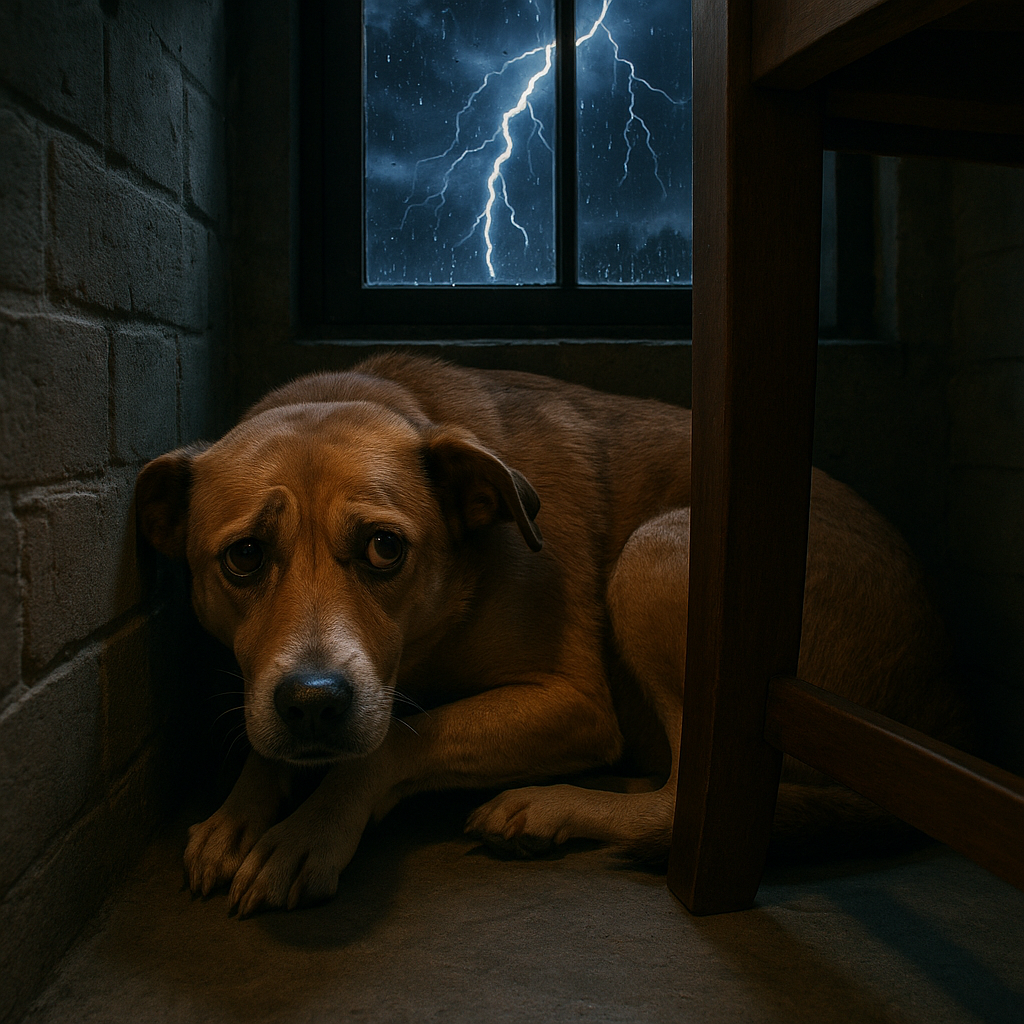
Noise phobia is a substantial fear-or-anxiety response to specific acoustic stimuli. Common triggers include:
- Fireworks — particularly the loud bangs and unpredictable timing of holiday displays.
- Thunderstorms — combination of acoustic, barometric, and electromagnetic factors.
- Gunshots and similar percussive sounds.
- Construction noise.
- Sirens.
- Some indoor sounds including specific household appliances, doorbell sounds, smoke detectors.
The behavioural signs of noise phobia range across severity:
Mild signs:
- Pacing, panting, alert posture during sounds.
- Seeking proximity to owners.
- Hiding in specific safe spots.
- Reduced appetite during the event.
Moderate signs:
- Trembling, shaking, drooling.
- Vocalisation (whining, barking, howling).
- Substantial pacing or restlessness.
- Trying to escape or seeking specific shelter spots.
- Loss of bladder or bowel control in some cases.
Severe signs:
- Frantic escape attempts including jumping through windows, breaking through doors, climbing fences.
- Self-injury during escape attempts.
- Profound dissociative states; the dog appears unaware of surroundings.
- Substantial physical distress markers (extreme drooling, trembling, panting).
- Lasting effects: continued elevated arousal hours after the event ends.
The welfare cost of severe noise phobia is substantial. Noise-phobic dogs may injure themselves seriously during escape attempts, may produce property damage, and have cumulative chronic-stress effects from anticipating events.
The Standard Multi-Component Management Approach
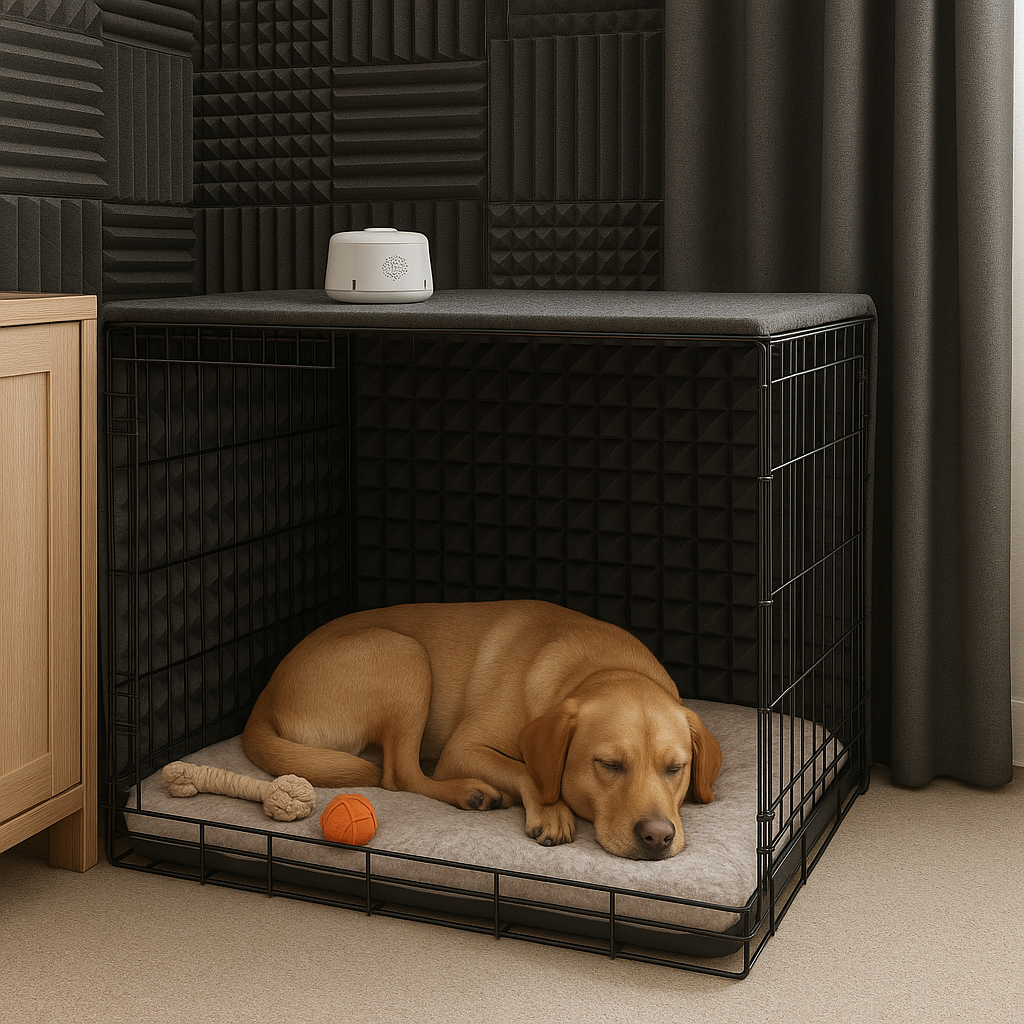
Effective management typically requires multiple components:
Environmental management. First-line and lowest-cost. Components:
- Safe-space provision. A specific area (often a closet, basement room, interior bathroom, or crate in a quiet location) where the dog can retreat. The space should be familiar and positively-associated.
- Sound buffering. White noise, music (some specifically-designed canine-calming music products exist), TV sound — provides masking that reduces the trigger intensity.
- Visual buffering. Closing curtains during fireworks; visual barriers reducing exposure to lightning flashes.
- Limiting outdoor exposure during expected events. Walks before fireworks displays start; not during.
- ID and microchip current. The escape risk during severe events makes lost-dog risk substantial; current ID supports recovery.
Behaviour modification (desensitisation and counter-conditioning).
- Recorded sounds at controlled intensity. Many noise-phobia recordings exist (Sounds Scary, similar resources).
- Pair with positive reinforcement. The dog hears the sound at low intensity while engaged in positive activities (eating, play, puzzle feeders).
- Gradually increase intensity. Over weeks-to-months, the dog is exposed to progressively-louder versions paired with positive reinforcement.
- The desensitization-counter-conditioning article covers the broader framework.
Pressure-wrap products. ThunderShirt, Storm Defender, and similar products apply gentle constant pressure to the dog's body, with claimed calming effects. Empirical evidence is modest but supportive — the products produce measurable improvement in some dogs without significant downside.
Pheromone products. Dog-appeasing pheromone (DAP, Adaptil) products have mixed evidence; some dogs benefit modestly. Worth trying as a low-cost adjunct.
Pharmacotherapy. For moderate-to-severe cases, pharmacological support is appropriate.
Pharmacological Options
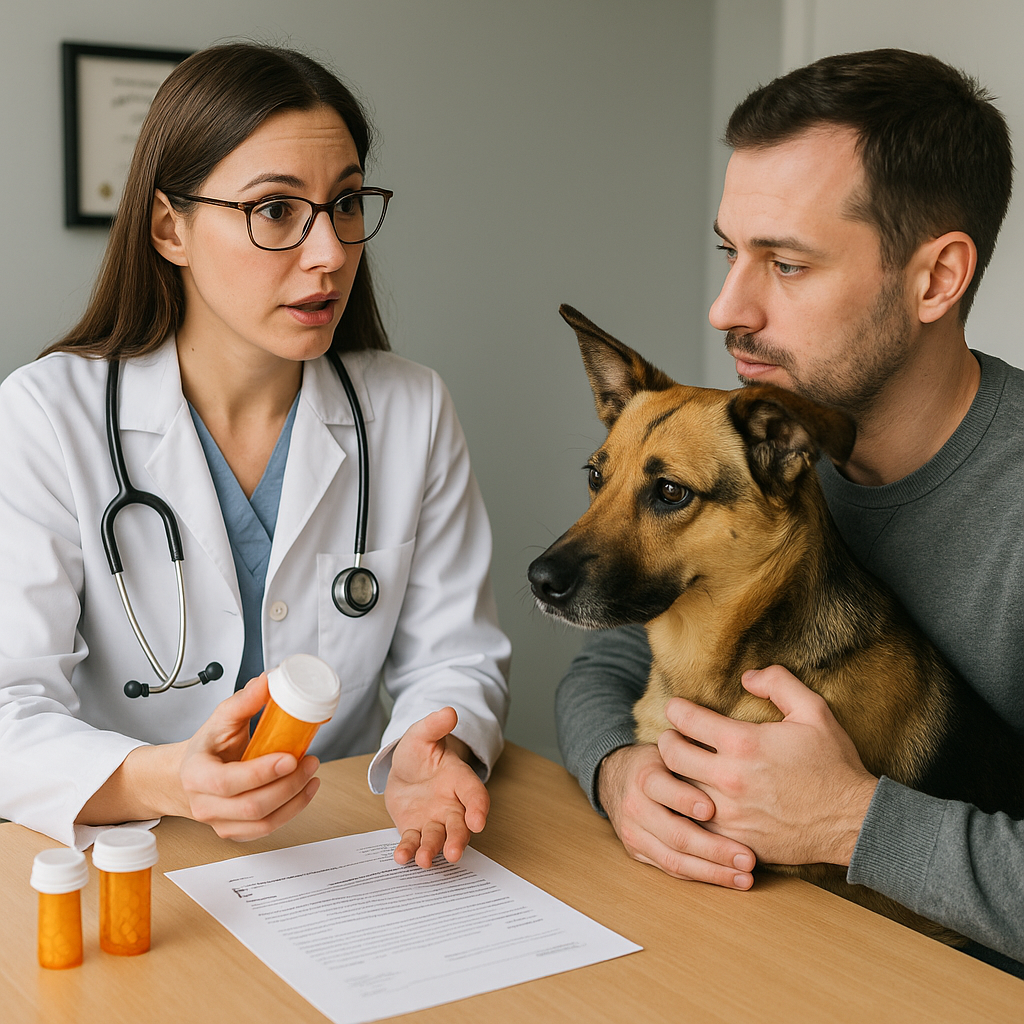
Several options exist, with varying evidence and applications:
Sileo (dexmedetomidine oromucosal gel). FDA-approved for canine noise aversion based on direct trial evidence (Korpivaara et al. 2017)[^korpivaara]. The product is a gel applied to the gum (oromucosal absorption). Acts within 30-60 minutes; effect lasts 2-3 hours. Requires veterinary prescription. Reasonable for predictable single-event situations (planned fireworks displays); requires advance prescription and acquisition.
Trazodone. Common short-term anti-anxiety prescription. Onset 1-2 hours. Used for noise events, veterinary visits, similar acute-anxiety contexts. Veterinary prescription required.
Gabapentin. Anti-anxiety effects in some dogs; sometimes combined with trazodone for synergistic effect. Veterinary prescription required.
Benzodiazepines (alprazolam, diazepam). Short-acting anti-anxiety. Some practitioners use; some prefer trazodone or gabapentin. Specific anti-anxiety effects vary by individual.
Daily anti-anxiety medications (fluoxetine, others). For dogs with substantial anxiety beyond just noise-phobia (covered in separation-anxiety article), daily medication can support both the broader anxiety pattern and noise-event responses.
Acepromazine — generally avoided as monotherapy. Older practitioner approach; sedates without addressing anxiety, sometimes leaving dogs cognitively impaired but still psychologically distressed. Modern practitioner consensus generally avoids this approach for noise phobia specifically; combinations with anxiolytics may be appropriate in specific cases.
The pharmacological choice is veterinary-territory; this article cannot prescribe specific protocols. The relevant point is that effective options exist for moderate-to-severe cases and that owners with severely noise-phobic dogs should engage with their veterinarian about pharmacological support.
A Practical Severity-Matched Approach
Mild cases. Environmental management (safe space, sound buffering) is often sufficient. Behaviour modification with recorded sounds during off-season periods can substantially reduce future-event reactivity.
Moderate cases. Combine environmental management with pharmacological support during expected events (Sileo, trazodone, or veterinary-determined alternative). Behaviour modification between events.
Severe cases. Veterinary-behaviourist consultation is appropriate. Multi-modal approach: environmental management, structured behaviour modification, daily and event-specific pharmacotherapy, possibly home-environment modifications (specific safe-room construction, secure containment to prevent escape during events).
What to Avoid
A few approaches that produce worse outcomes:
Punishing the fear response. Punishing trembling, hiding, or escape attempts produces no improvement and adds welfare cost.
"Forcing the dog to face it" / flooding. Continued exposure to severe triggers without management produces worsening rather than habituation; severe noise-phobic dogs do not "get used to it" through forced exposure.
Dismissing the response as "the dog being dramatic". The empirical literature documents real welfare cost; the response is not dramatic, it is genuinely distressing.
Acepromazine alone for severe phobia. As noted above, modern consensus generally avoids this; combinations with anxiolytics may be appropriate but the ace-only approach is suboptimal.
Reinforcing fear through over-sympathetic behaviour. This is contested. Some practitioners argue that comforting an anxious dog reinforces the fear; the modern consensus is that comfort during fear responses does not reinforce the fear and may help reduce arousal. Don't withhold reasonable comfort from a frightened dog; the older "ignore the fear" advice has weaker empirical foundation than the soothing approach.
What This Does Not Imply
- Every dog with noise sensitivity needs medication. Many do well with environmental management alone.
- Pharmacotherapy is a substitute for behaviour modification. The combination produces better outcomes than either alone.
- Severe noise phobia is fully reversible. Reduction in severity is achievable; complete elimination of the response is uncommon in severely-affected dogs.
What Is and Is Not Settled
Settled: noise phobias are common (40-50% of dogs at some level), with substantial welfare costs in severe cases; multi-component management combining environmental, behavioural, and (in moderate-to-severe cases) pharmacological approaches is effective; Sileo has FDA approval for canine noise aversion based on direct trial evidence (Korpivaara et al. 2017)[^korpivaara]; ThunderShirt and similar pressure-wrap products have modest but supportive evidence.
Not settled: optimal pharmacological choice across the spectrum of patient profiles; the comparative effectiveness of specific desensitisation protocols.
Key Takeaways
- Noise phobias affect 40-50% of dogs at some level; severe cases produce substantial welfare cost and self-injury risk.
- Multi-component management: environmental management (safe space, sound buffering, visual buffering), behaviour modification (desensitisation, counter-conditioning), pharmacotherapy in moderate-to-severe cases.
- Sileo (dexmedetomidine oromucosal gel) is FDA-approved for canine noise aversion; trazodone, gabapentin, and other anxiolytics are commonly used. All require veterinary prescription.
- ThunderShirt and pressure-wrap products have modest but supportive evidence as adjuncts.
- Avoid: punishment, flooding/forced exposure, dismissal of the response, acepromazine-only protocols.
- ID and microchip current; escape risk during severe events makes lost-dog risk substantial.
Sources & further reading
- Korpivaara, M.; Laapas, K.; Huhtinen, M.; Schöning, B.; Overall, K.. (2017). Dexmedetomidine oromucosal gel for noise-associated acute anxiety and fear in dogs—a randomised, double-blind, placebo-controlled clinical study. Veterinary Record, 180(14), 356. https://doi.org/10.1136/vr.104045
- American Veterinary Society of Animal Behavior. AVSAB Noise Phobia Position Statement. AVSAB. https://avsab.org/resources/position-statements/
- Journal of Veterinary Behavior. Journal of Veterinary Behavior. Elsevier. https://www.sciencedirect.com/journal/journal-of-veterinary-behavior