What Oxytocin Does
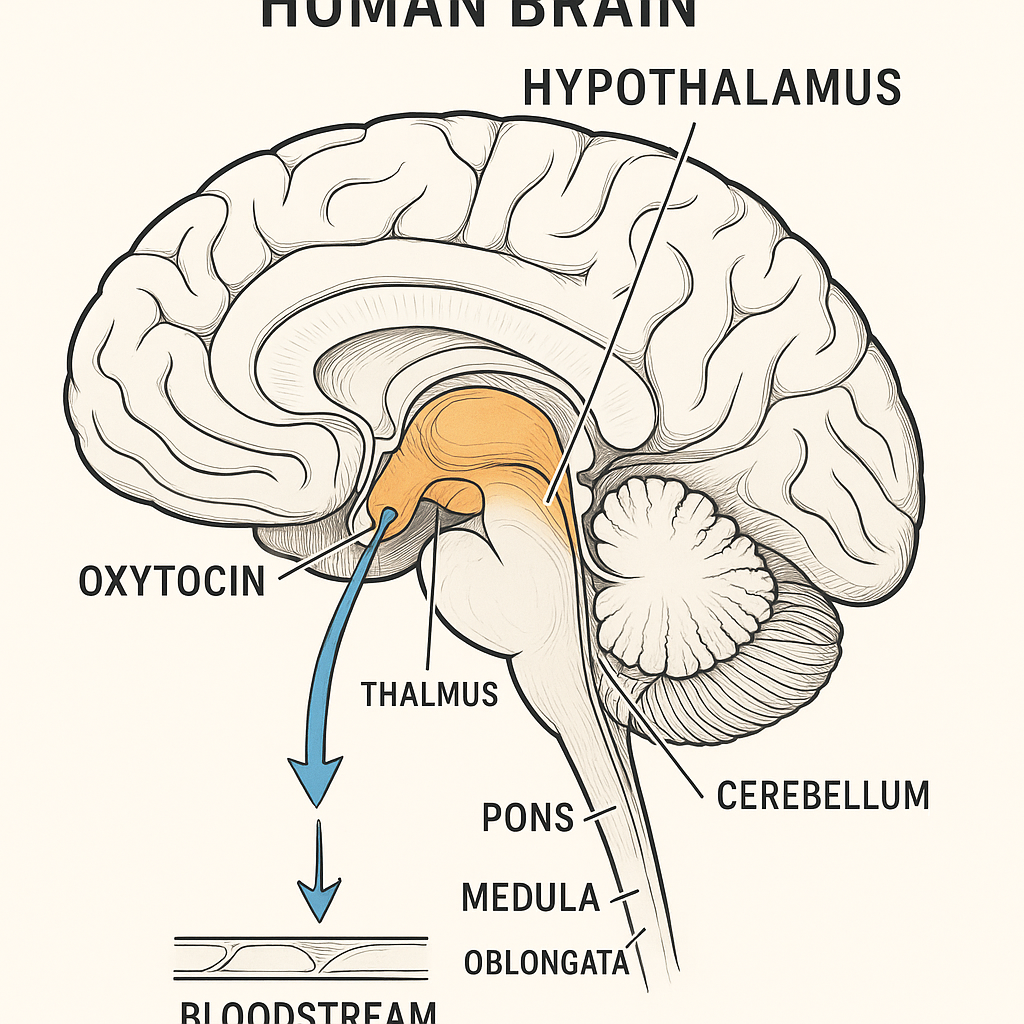
Oxytocin is a neuropeptide produced in the hypothalamus and released into the bloodstream and into specific brain regions. Across mammals, it has multiple functions including labour-and-delivery effects, milk letdown during nursing, and — most relevant here — modulation of social bonding behaviour.
In human research, oxytocin elevations are associated with:
- Mother-infant bonding, particularly during nursing and skin-to-skin contact.
- Romantic-partner pair bonding.
- Trust and social-cooperation behaviours.
- Reduced amygdala reactivity to social stimuli (the "calming" effect on social anxiety).
- The mother-infant gaze-and-bonding feedback loop.
In dogs and other social mammals, oxytocin shows similar broad functions: bonding-related effects, calming effects in social contexts, modulation of social-attention.
The "love hormone" framing in popular media is reasonable as a metaphor but oversimplifies the picture. Oxytocin is one component of a complex social-bonding system; it is not the singular cause of social bonds.
The Nagasawa 2015 Findings
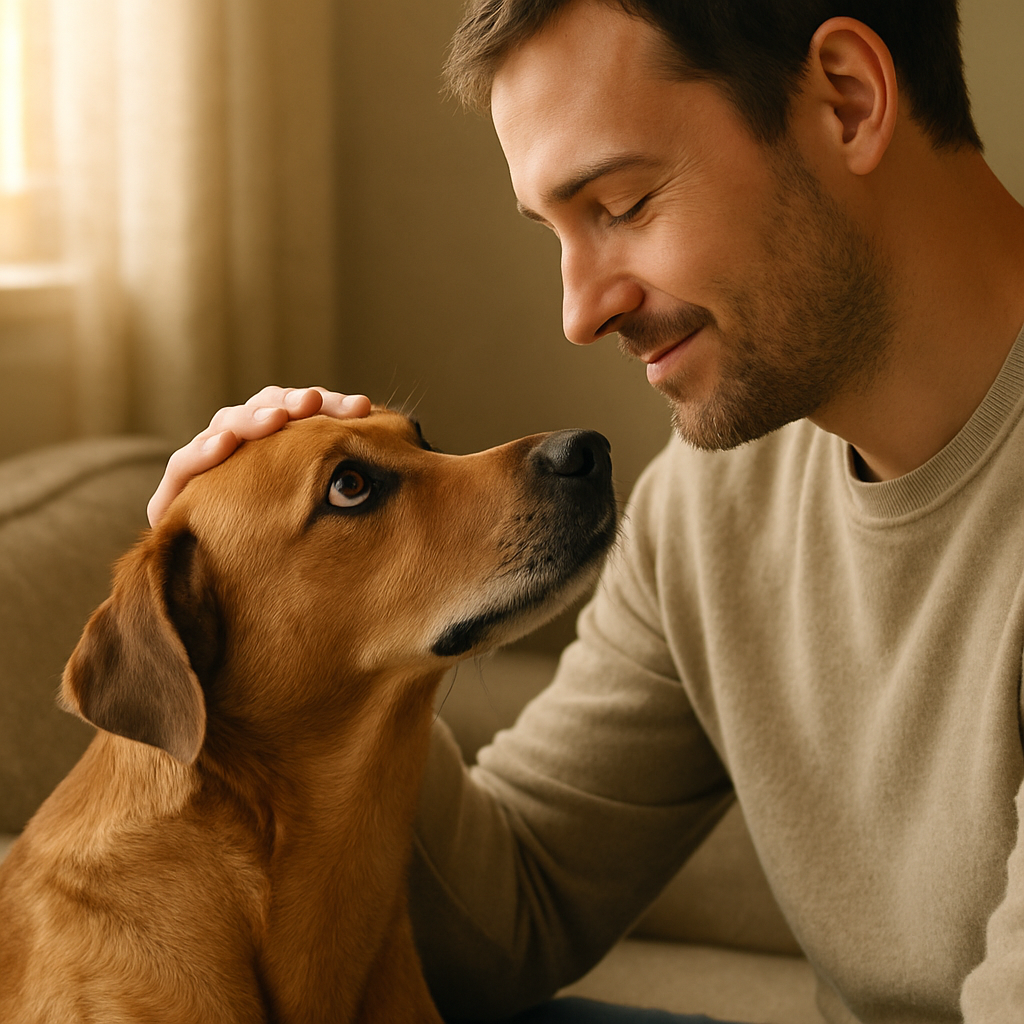
Nagasawa, Mitsui, En, Ohtani, Ohta, Sakuma, Onaka, Mogi & Kikusui (2015) published the seminal paper in Science establishing the bidirectional oxytocin elevations in dogs and owners during mutual gaze[^nagasawa]. The key findings:
Experiment 1. Pet dogs and their owners interacted naturally in a controlled setting. Urinary oxytocin was measured before and after the interaction in both species. The interaction time was divided into "long-gaze" and "short-gaze" pairs based on observed mutual-gaze duration during the session. Result: long-gaze pairs showed notably elevated oxytocin in both species post-interaction, while short-gaze pairs did not. The effect was specific to mutual gaze, not to total interaction time.
Experiment 2. Dogs were administered intranasal oxytocin (vs. placebo) and the gaze duration was measured. Result: female dogs given oxytocin showed substantially increased gaze duration toward their owners; the increase was associated with increased owner oxytocin in turn. The administration completed the demonstration of the loop: oxytocin → more gaze → more oxytocin.
Comparative finding with hand-raised wolves. As a control, the same paradigm was attempted with hand-raised wolves and their human caretakers. The wolves did not show the gaze-oxytocin loop. This suggests that the dog-human gaze-oxytocin mechanism is not simply a generic mammalian feature; it may have evolved during dog domestication.
The combined picture: dogs and humans have a bidirectional oxytocin-gaze feedback loop that parallels the mechanism documented in human mother-infant bonding, and this loop appears to be a feature of dog-human interactions specifically rather than a universal canid feature.
Replication and Extension
Subsequent work has replicated and extended the original findings:
- Romero and colleagues (2014, 2015) examined oxytocin effects on dog social behaviour in different contexts.
- MacLean and colleagues have studied breed and individual variation in oxytocin response.
- Other groups have examined the loop in different stress and bonding contexts.
The convergent picture: the gaze-oxytocin loop is robust enough to be replicable across labs and contexts. Specific magnitudes and conditions vary; the underlying phenomenon is well-supported.
What the Evidence Establishes
A few things the empirical work supports:
Dogs and humans have a measurable inter-species bonding mechanism. This is striking because cross-species bonding is comparatively rare in the animal kingdom; the evolution of dogs from wolves appears to have included the development of bonding mechanisms that work with humans rather than (or in addition to) other dogs.
Mutual gaze is functionally significant. The eye contact between owner and dog is not just a behavioural signal; it has measurable physiological consequences in both species.
The bond is not unidirectional. Owners' oxytocin responses to their dogs are real; dogs' oxytocin responses to their owners are real; both contribute to the relationship.
Domestication shaped social-bonding mechanisms. The wolf-dog comparison in Nagasawa 2015 supports the broader hypothesis that dog domestication selected for traits that support human-dog bonding, beyond just tameness or working aptitudes.
What the Evidence Does Not Establish
A few things the popular framing sometimes overstates:
Oxytocin is not the entire bonding mechanism. Bonding involves multiple neurochemical systems (oxytocin, vasopressin, dopamine, opioid, and others), behavioural patterns, and learned associations. Oxytocin is one component.
The "love hormone" framing is metaphorical. Oxytocin elevations are not equivalent to subjective feelings of love; they reflect physiological states that correlate with bonding contexts. The dog's subjective experience is something we infer; the oxytocin measurement is what we directly observe.
Mutual gaze does not "cause" bonding by itself. Long-term bonding involves sustained relationships, daily care, training history, and many other factors. Mutual gaze is one element that supports bonding, not the singular cause.
Individual and breed variation is substantial. Not every dog or every owner responds at the same magnitude; the loop is real but variable.
Practical Implications
A few takeaways:
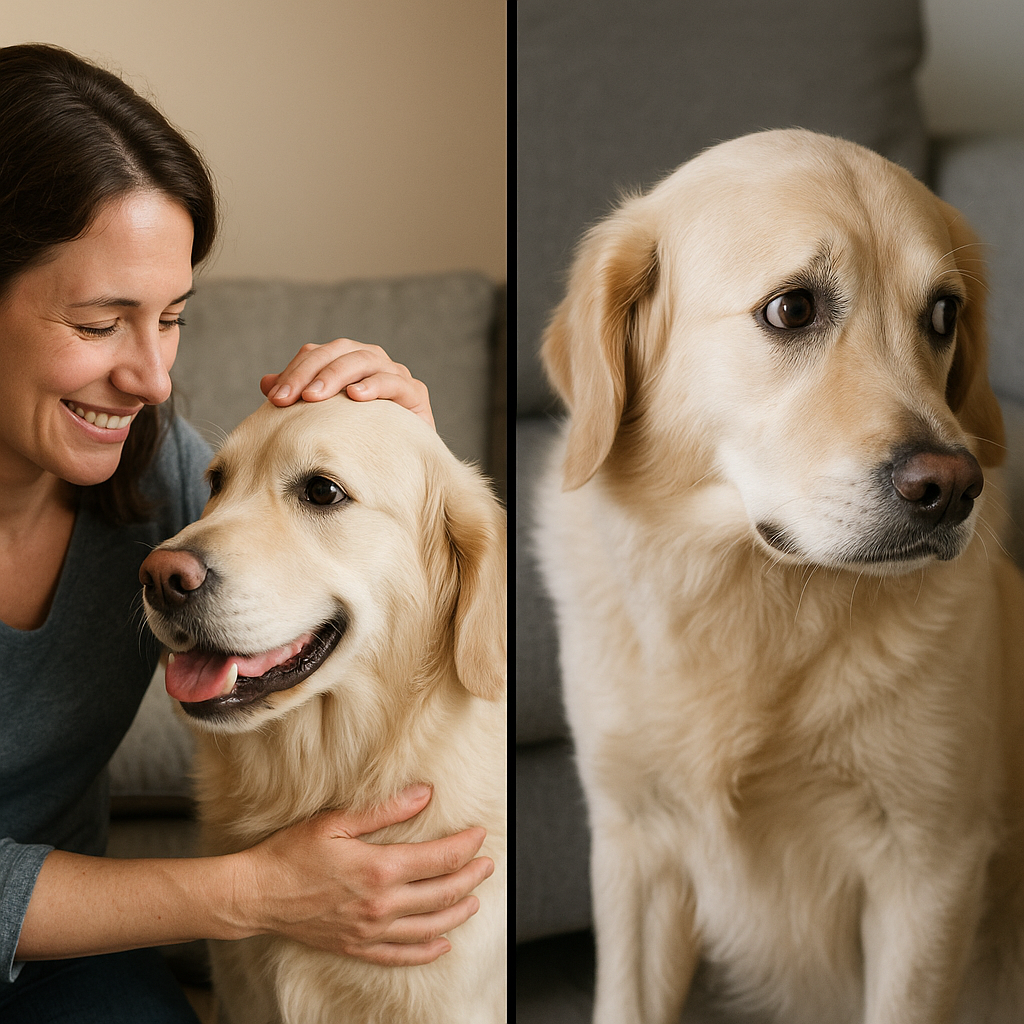
Eye contact with your dog matters. Calm mutual gaze in positive contexts (during gentle petting, during quiet relaxation, during focused training) reinforces the bond through the oxytocin mechanism. Avoidance of eye contact (which dogs read as a calming signal in dog-dog contexts but is more nuanced in dog-human contexts) does not provide the same benefit.
Care-giving activities support the bond. Petting, brushing, gentle handling, training, feeding — these activities have associated oxytocin effects in both species.
Reactive or fearful dogs may have a different response pattern. Dogs with anxiety or fearfulness may not engage in the gaze-oxytocin loop in the same way; rebuilding positive interactions through structured positive-reinforcement contexts can support the relationship over time.
Stress reduces oxytocin response. A dog in a chronic-stress state may not engage in the bonding-mechanism positive feedback as readily; addressing the stress (through environmental management, training, veterinary support if needed) supports the broader relationship.
Forced eye contact with anxious dogs is counterproductive. A dog who finds direct eye contact threatening (often dogs new to the household, fearful dogs, or dogs with reactivity issues) needs gentle, gradual building of comfortable eye contact rather than forced staring.
What This Does Not Imply
- More oxytocin is universally better. The role is contextual and physiological; "more oxytocin" is not a goal in itself.
- Owners can or should administer oxytocin to their dogs. The Nagasawa 2015 administration was a research protocol, not a therapeutic recommendation.
- Dogs without strong gaze-oxytocin response do not bond with their owners. They do; the mechanism is one component of bonding, not the only or most important one.
What Is and Is Not Settled
Settled: mutual gaze between dogs and owners produces bidirectional oxytocin elevations in both species (Nagasawa et al. 2015; replications)[^nagasawa]; the mechanism parallels the human mother-infant gaze-bonding loop; the wolf comparison suggests this is a domestication-relevant feature; oxytocin contributes to inter-species bonding.
Not settled: the precise quantitative magnitude of the loop across breeds, individual dogs, and contexts; the contributions of other neurochemical systems to dog-human bonding alongside oxytocin.
Key Takeaways
- Oxytocin is a neuropeptide with well-established bonding-related functions across mammals.
- Nagasawa et al. (2015) established that mutual gaze between dogs and owners produces bidirectional oxytocin elevations in both species — a positive feedback loop paralleling human mother-infant bonding.
- The wolf-dog comparison suggests this mechanism evolved during dog domestication.
- The "love hormone" framing is metaphorical; oxytocin is one component of complex bonding, not the singular cause.
- Practical implications: calm mutual gaze in positive contexts reinforces the bond; care-giving activities support oxytocin; stress and fearfulness can disrupt the loop.
- Forced eye contact with anxious or fearful dogs is counterproductive; gentle, gradual building of comfort is the better approach.
Sources & further reading
- Nagasawa, M.; Mitsui, S.; En, S.; Ohtani, N.; Ohta, M.; Sakuma, Y.; Onaka, T.; Mogi, K.; Kikusui, T.. (2015). Oxytocin-gaze positive loop and the coevolution of human-dog bonds. Science, 348(6232), 333-336. https://doi.org/10.1126/science.1261022
- Romero, T.; Nagasawa, M.; Mogi, K.; Hasegawa, T.; Kikusui, T.. (2014). Oxytocin promotes social bonding in dogs. Proceedings of the National Academy of Sciences, 111(25), 9085-9090. https://doi.org/10.1073/pnas.1322868111
- Horowitz, A.. (2009). Inside of a Dog: What Dogs See, Smell, and Know. Scribner. https://www.alexandrahorowitz.net/
- American Veterinary Society of Animal Behavior. AVSAB Human-Animal Bond resources. AVSAB. https://avsab.org/resources/position-statements/