The Shelter Adoption Picture
Shelter and rescue adoption is a major source of pet dogs in many countries; in the U.S., about one-third of pet dogs are acquired from shelters or rescue organisations. Shelter adoption is welfare-positive at the population level — it provides homes for dogs that would otherwise face uncertain outcomes, supports the broader animal-welfare infrastructure, and often costs less than purchasing from breeders.
But shelter adoption carries specific behavioural risks that adopting from a known-history source (a reputable breeder, a previous family) does not. Recognising and managing these risks considerably affects outcome quality.
The article is for prospective adopters considering a shelter dog, with practical guidance on the risk profile and mitigation strategies. The article does not argue against shelter adoption — it argues for prepared shelter adoption.
What Makes Shelter Adoption Different
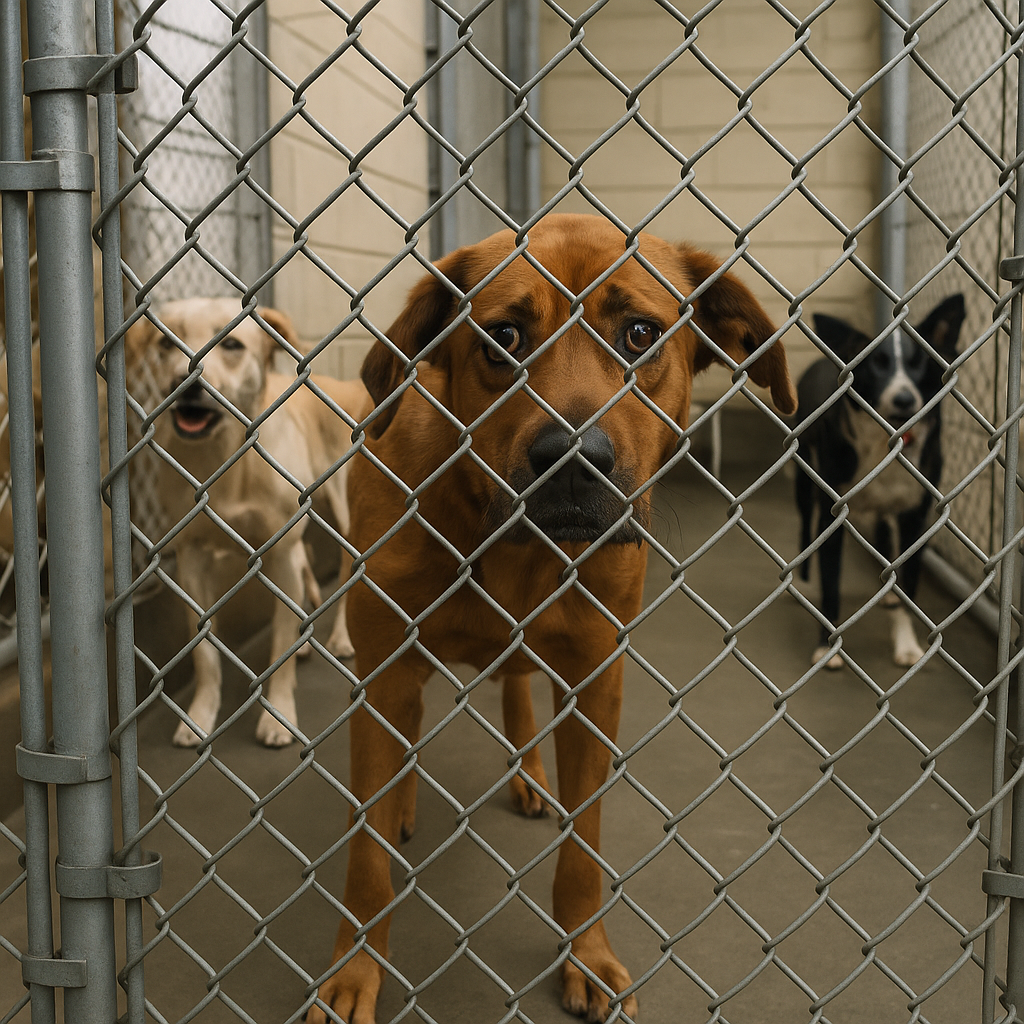
Several factors create the specific risk profile:
Unknown pre-shelter history. Most shelter dogs arrive without complete histories. Whether they were socialized appropriately as puppies, whether they have specific trauma exposures, whether they have abandonment-related anxiety, whether they have history with children, other dogs, or specific stimuli — these are typically not known with confidence.
Shelter-environment stress effects. Shelters are inherently stressful environments. Dogs in shelters experience separation from previous homes (or no stable home), reduced social contact, kennel-environment confinement, exposure to many other stressed dogs, novel routines, and other stressors. The behaviour observed in shelter conditions often does not match the behaviour that emerges in a stable home environment.
The "honeymoon period" effect. Some shelter dogs show reserved, well-behaved patterns for the first 1-3 weeks in a new home (sometimes called the "honeymoon period" or "decompression"), then begin showing fuller behavioural patterns including any problem behaviours that were previously suppressed by stress. Adopters who thought they had matched well based on the first week may encounter different behaviour as the dog settles in.
Variable behavioural-assessment predictive validity. Shelter-administered behavioural assessments have variable success in predicting post-adoption behaviour. Some assessments produce useful information; others have weak predictive validity. Marder et al. (2013) and others have examined this; the picture is mixed.
Selection effects. Dogs who arrive at shelters often arrive because of specific issues — surrender for behaviour problems, abandonment after life changes, owner inability to manage. The population includes dogs with genuine pre-existing behavioural concerns, not just unfortunate-circumstance dogs.
Specific Risk Areas
A short list of behavioural risks elevated in shelter populations:
Separation-related issues. Shelter dogs frequently have abandonment or relinquishment in their histories; separation-related anxiety in the new home is more common.
Resource-guarding. Resource-guarding behaviours sometimes emerge or worsen during shelter stays and may persist post-adoption. The resource-guarding article covers the broader framework.
House-training issues. Dogs may have lost or never had reliable house-training; the new owner needs to assume retraining will be needed.
Reactivity on walks. Shelter dogs sometimes develop or carry leash-reactivity issues; environmental management and behaviour modification may be needed post-adoption.
Storms, fireworks, and noise sensitivity. May be elevated in shelter dogs.
Social issues with other dogs. Variable; some shelter dogs are highly social, others have specific dog-dog issues from their history.
Issues with specific people categories. Men, children, people in uniforms, people with hats — specific stimuli that triggered fear or aggression in the dog's prior context.
Medical issues that affect behaviour. Pain, sensory impairment, or undiagnosed conditions can produce behaviour that appears purely behavioural but has medical roots.
Pre-Adoption Assessment
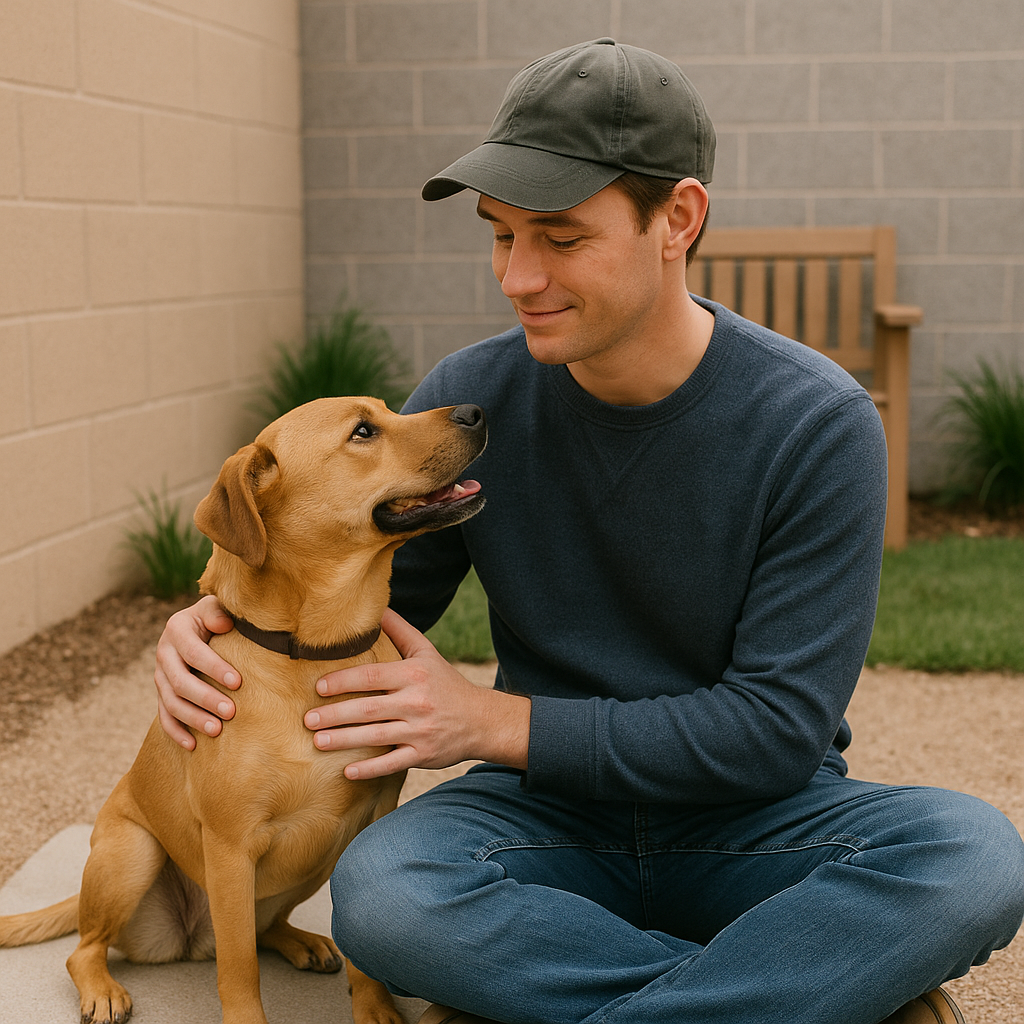
A workable approach to pre-adoption assessment:
Multiple visits. Visit the shelter multiple times to observe the dog under different conditions. A first-impression assessment is less reliable than observations across visits.
Out-of-kennel time. Spend time with the dog out of the kennel environment if possible. Behaviour in a quieter context is often more representative.
Observe with potential family members. All household members (including children, if applicable) should meet the dog. The dog's response to specific people gives information.
Dog-dog interactions if applicable. If you have other dogs at home, the shelter introduction provides initial information (acknowledging that home introductions over time are more informative).
Ask shelter staff. They observe the dog day-to-day and have information that is not visible in brief assessment visits. Honest shelter staff will share concerns rather than over-promise.
Trust your instincts but don't force a decision. A specific dog may not be the right match; passing on one dog to find a better match is appropriate.
Use formal assessment results as one input. Tools like Meet Your Match or SAFER produce categories and recommendations; they are useful as part of the overall assessment, not as the sole basis for decisions.
Decompression and the First 3-3-3
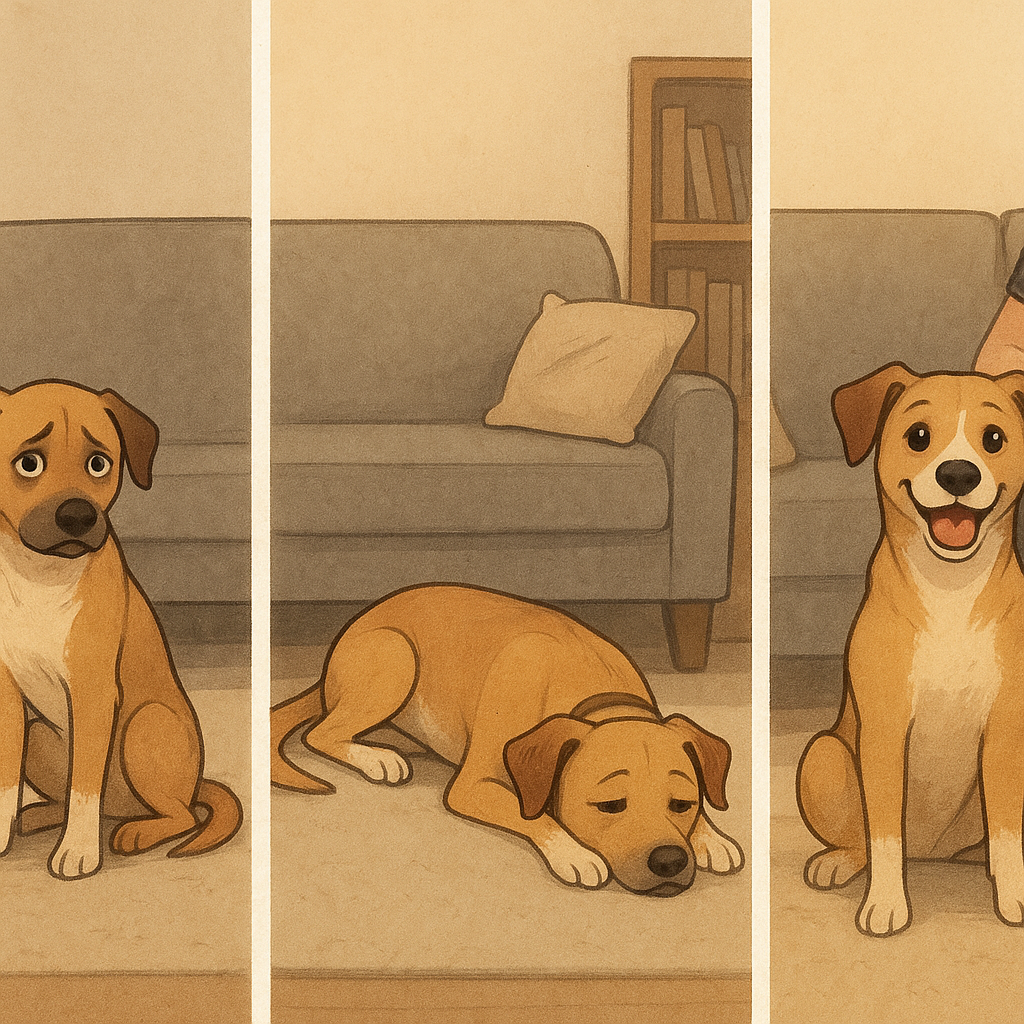
A widely-used framework for the new dog's first weeks: 3 days, 3 weeks, 3 months ("3-3-3"). The framing:
First 3 days. The dog is overwhelmed by the new environment. Limit visitors, keep routines simple, allow quiet time, focus on basic care (food, water, elimination, safe sleep). The dog may eat less, sleep more, hide, or otherwise show subdued behaviour.
First 3 weeks. The dog begins to settle. Routines develop, the dog learns the household patterns, more behaviour begins to emerge. Some "honeymoon period" effects may begin to fade and fuller behavioural patterns appear.
First 3 months. The dog has integrated into the household. Most behaviours that will be ongoing have emerged. The relationship with the new family is established.
The framework is approximate but useful for setting expectations. Adopters who expect immediate normal behaviour are often disappointed; those who expect decompression and gradual settlement are typically better satisfied.
Post-Adoption Support
Practical post-adoption considerations:
Trainer or behaviourist relationship. Establishing relationship with a positive-reinforcement-based trainer or veterinary behaviourist before issues become acute is valuable. The trainer is a resource as needs emerge.
Veterinary baseline visit early. Comprehensive examination, baseline bloodwork, and discussion of any specific health concerns. Some behaviour issues have medical roots.
Slow introduction to challenging contexts. Other dogs, busy environments, specific stimuli — gradual exposure is generally better than fast immersion.
Clear management plans. Crating during alone-time initially, structured walks, defined eating areas, bite-prevention rules with children — clear plans reduce the chance of acute incidents.
Long-enough trial period. Some shelters offer 30-60 day trial periods; using the time to genuinely assess the match (rather than committing fully on day 1) supports better outcomes.
Honest evaluation. If specific issues emerge that the household cannot manage, honest engagement with the shelter about return options is part of responsible adoption. Shelters generally prefer return-and-rematch over adopter-attempted-management of issues beyond the household's capacity.
What This Does Not Imply
- Shelter adoption is uniformly risky. Most adoptions go well; the article emphasises preparation, not avoidance.
- Breeder dogs are uniformly safer. Breeder dogs have their own risk patterns; the comparison is not "shelter risk vs. no risk" but "different risk patterns".
- All shelter dogs have hidden problems. Many do not; many are well-adjusted dogs in unfortunate circumstances.
- Shelter dogs require professional support. Most do not; some do.
What Is and Is Not Settled
Settled: shelter dogs have specific behavioural-risk profiles relative to known-history sources due to unknown pre-shelter history, shelter-environment stress effects, and selection effects[^aspca][^avsab]; behavioural assessment in shelters has variable predictive validity for post-adoption behaviour (Marder 2013 and others); decompression and integration over weeks-to-months is the typical pattern.
Not settled: optimal assessment protocols across shelter populations; the relative effectiveness of specific structured pre-adoption matching tools; the comparative outcomes of breed-specific vs. general shelter populations.
Key Takeaways
- Shelter dogs have specific behavioural-risk profiles due to unknown history, shelter stress, and selection effects.
- Behavioural assessment tools (Meet Your Match, SAFER) provide useful but variably-predictive information; they are one input, not the sole basis for decisions.
- Multiple visits, out-of-kennel time, family-member meetings, and shelter-staff input contribute to the assessment.
- The 3-3-3 framework (3 days, 3 weeks, 3 months) is a useful approximation for the decompression and integration timeline.
- Post-adoption support: trainer relationship, early veterinary baseline, slow introduction to challenging contexts, clear management plans, long-enough trial period, honest evaluation.
- Most shelter adoptions go well; the article emphasises preparation rather than avoidance.
Sources & further reading
- American Society for the Prevention of Cruelty to Animals. ASPCA Shelter Behavior Resources and Meet Your Match. ASPCA. https://www.aspca.org/
- American Veterinary Society of Animal Behavior. AVSAB Shelter Behavior Position Statement. AVSAB. https://avsab.org/resources/position-statements/
- Marder, A. R.; Shabelansky, A.; Patronek, G. J.; Dowling-Guyer, S.; D'Arpino, S. S.. (2013). Food-related aggression in shelter dogs: a comparison of behavior identified by a behavior evaluation in the shelter and owner reports after adoption. Applied Animal Behaviour Science, 148(1-2), 150-156. https://doi.org/10.1016/j.applanim.2013.07.007